The Most Fuel-Efficient 100kVA Diesel Generator – FPT, Perkins, Hyundai, Baudouin & Cummins Compared
When purchasing a 100kVA diesel generator, fuel consumption is one of the most important factors to consider, particularly if the generator will be operating regularly or supplying prime power.
Two generators producing the same electrical output can consume different amounts of diesel. Over hundreds or thousands of running hours, those differences can have a significant impact on operating costs.
At Target Power Generators, we supply genuine industrial diesel generators powered by engines from manufacturers including FPT Iveco, Perkins, Hyundai, Baudouin, Cummins and Caterpillar.
In this guide, we compare five 100kVA engine options at 75% prime load, examine their fuel consumption in litres per hour, calculate their approximate fuel efficiency in litres per kilowatt-hour and demonstrate how those differences affect running costs.
We also explain why the most fuel-efficient engine is not necessarily the best generator for every application.
Looking to buy a generator? Explore our range of 100kVA diesel generators for sale →
Contents
- What Is a 100kVA Diesel Generator?
- 100kVA Generator Fuel Consumption Comparison
- Which 100kVA Engine Is Most Fuel-Efficient?
- FPT Iveco 100kVA Generator
- Perkins 100kVA Generator
- Hyundai 100kVA Generator
- Baudouin 100kVA Generator
- Cummins 100kVA Generator
- Caterpillar 100kVA Generators
- 100kVA Generator Running Costs
- Why Generator Load Matters
- Why Fuel Efficiency Is Not Everything
- Prime Power vs Standby Power
- Common 100kVA Generator Applications
- Choosing the Right 100kVA Generator
- Frequently Asked Questions
What Is a 100kVA Diesel Generator?
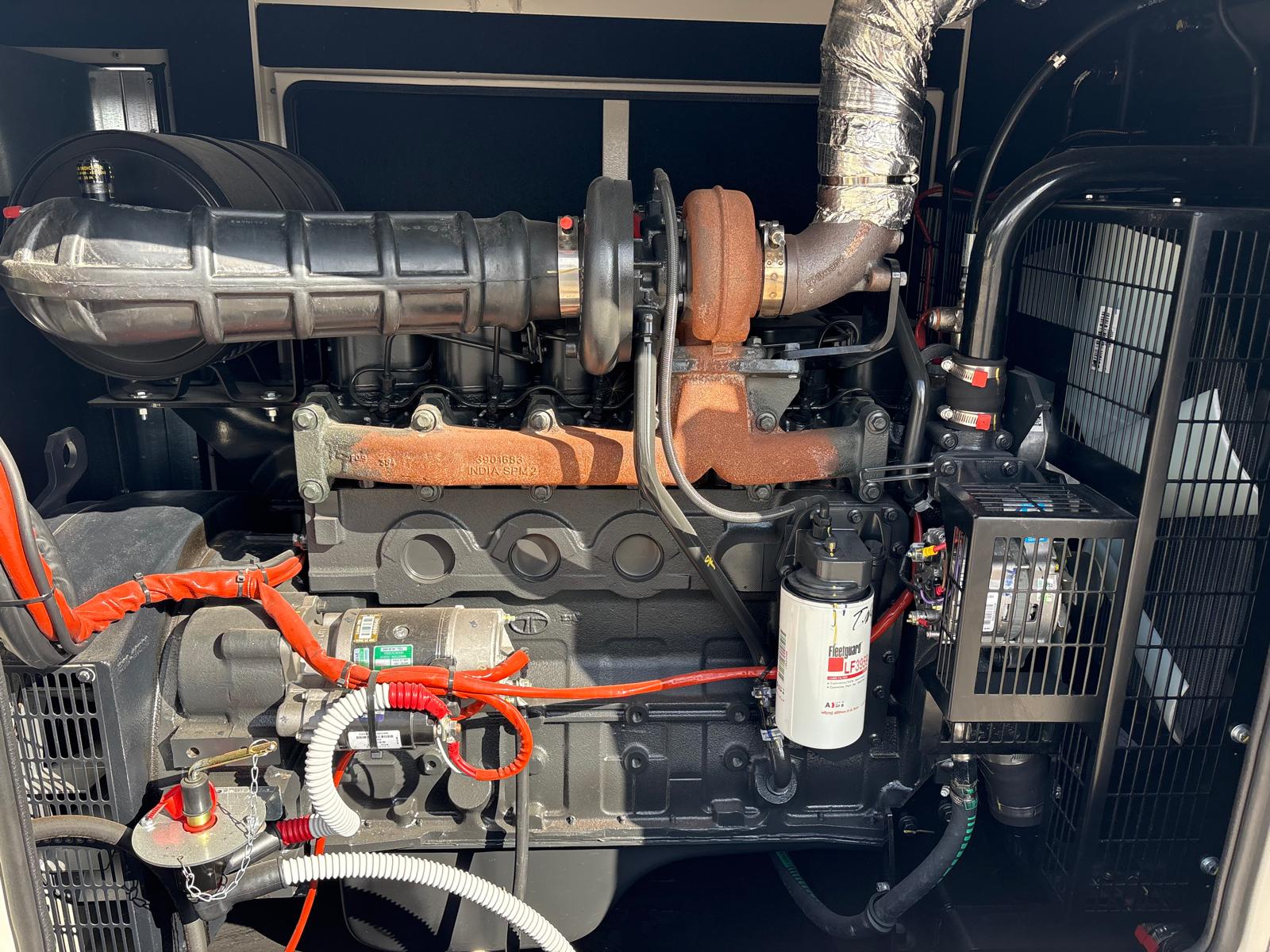
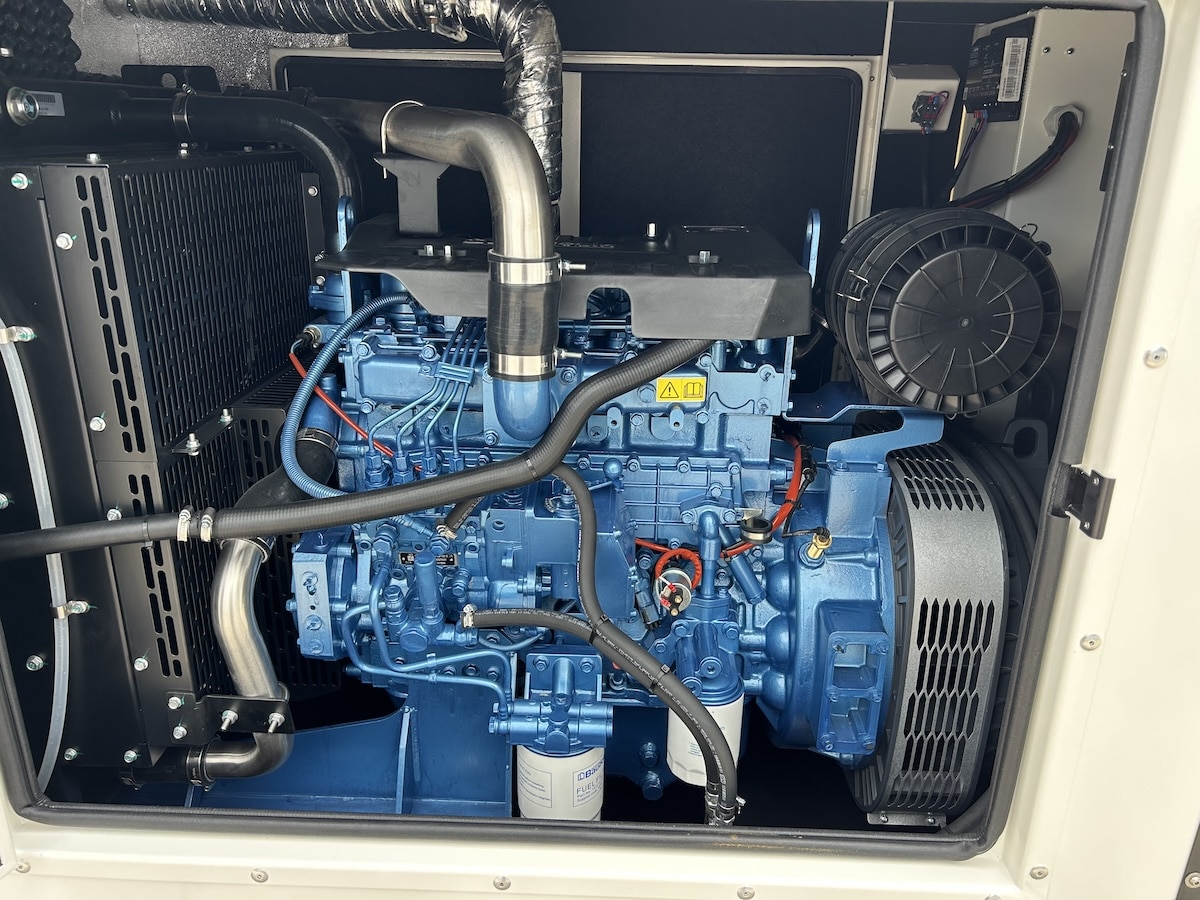
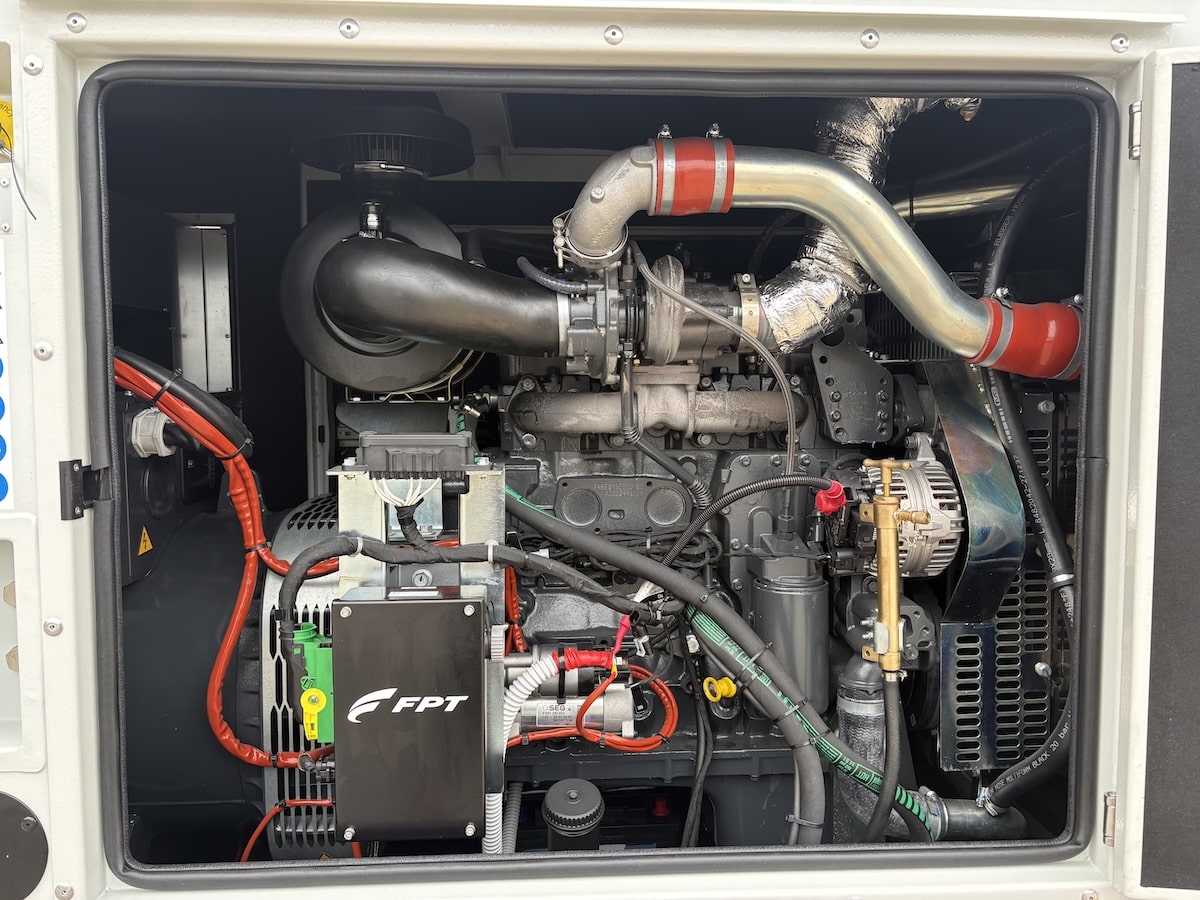
A 100kVA diesel generator is an industrial power generation unit commonly used for construction sites, agriculture, manufacturing facilities, commercial buildings, temporary power and emergency backup applications.
Many generators in this size range offer approximately:
- 100kVA prime power (PRP) – suitable for regular operation within the manufacturer’s specified prime-power duty conditions.
- 110kVA standby power (ESP) – intended for emergency backup operation within the manufacturer’s standby rating and operating limitations.
At a power factor of 0.8, a 100kVA generator produces approximately 80kW of real electrical power at its rated output.
At 75% load, this corresponds to approximately 60kW.
This 60kW electrical output is used to calculate the litres of diesel consumed per kilowatt-hour in the comparison below.
At 400V three-phase, a 100kVA generator produces approximately 144A at its rated apparent-power output.
100kVA Diesel Generator Fuel Consumption Comparison
The following comparison uses the stated 75% load fuel consumption figures for five industrial diesel engine options in the 100kVA prime-power class.
All five figures are compared against the same nominal reference point: 75% of 100kVA prime power, equivalent to approximately 60kW electrical output at 0.8 power factor.
| Position | Engine | Fuel at 75% | Approx. L/kWh |
|---|---|---|---|
| 1 | FPT Iveco N45TM2A | 16.2 L/h | 0.270 |
| 2 | Perkins 1104C-44TAG2 | 17.1 L/h | 0.285 |
| 3= | Hyundai SP344CC | 17.4 L/h | 0.290 |
| 3= | Baudouin 4M11G120/5 | 17.4 L/h | 0.290 |
| 5 | Cummins 6BTA5.9-G5 | 18.0 L/h | 0.300 |
Finding: The FPT Iveco N45TM2A has the lowest stated fuel consumption in this five-engine comparison at 16.2 litres per hour.
The Hyundai SP344CC and Baudouin 4M11G120/5 share third position, both consuming 17.4 litres per hour at the stated load.
Technical note: These calculations use the fuel figures supplied for this comparison. They have not been independently verified through a single controlled test of five complete generator sets. The L/kWh values assume each figure corresponds to approximately 60kW electrical output. Published fuel data may have manufacturer tolerances and different test conditions, so the results should be treated as indicative comparisons rather than guaranteed real-world performance.
Which 100kVA Diesel Generator Is the Most Fuel-Efficient?
Based on the five supplied fuel-consumption figures, the FPT Iveco N45TM2A offers the lowest stated consumption at 75% prime load.
Its consumption of 16.2 L/h compares with:
- Perkins: 17.1 L/h – approximately 5.3% more fuel than FPT.
- Hyundai: 17.4 L/h – approximately 7.4% more fuel than FPT.
- Baudouin: 17.4 L/h – approximately 7.4% more fuel than FPT.
- Cummins: 18.0 L/h – approximately 11.1% more fuel than FPT.
Expressed another way, the FPT consumes approximately 5.3% less fuel than Perkins, 6.9% less than Hyundai and Baudouin, and 10% less than Cummins when the difference is measured against each alternative engine’s consumption.
For a generator operating thousands of hours per year, these differences can translate into meaningful fuel savings.
However, the stated difference between FPT and Perkins is relatively small. Where manufacturer fuel-consumption tolerances are around ±5%, the results should not be interpreted as proof that every FPT generator will outperform every Perkins generator under all conditions.
FPT Iveco 100kVA Diesel Generator – 16.2 L/h
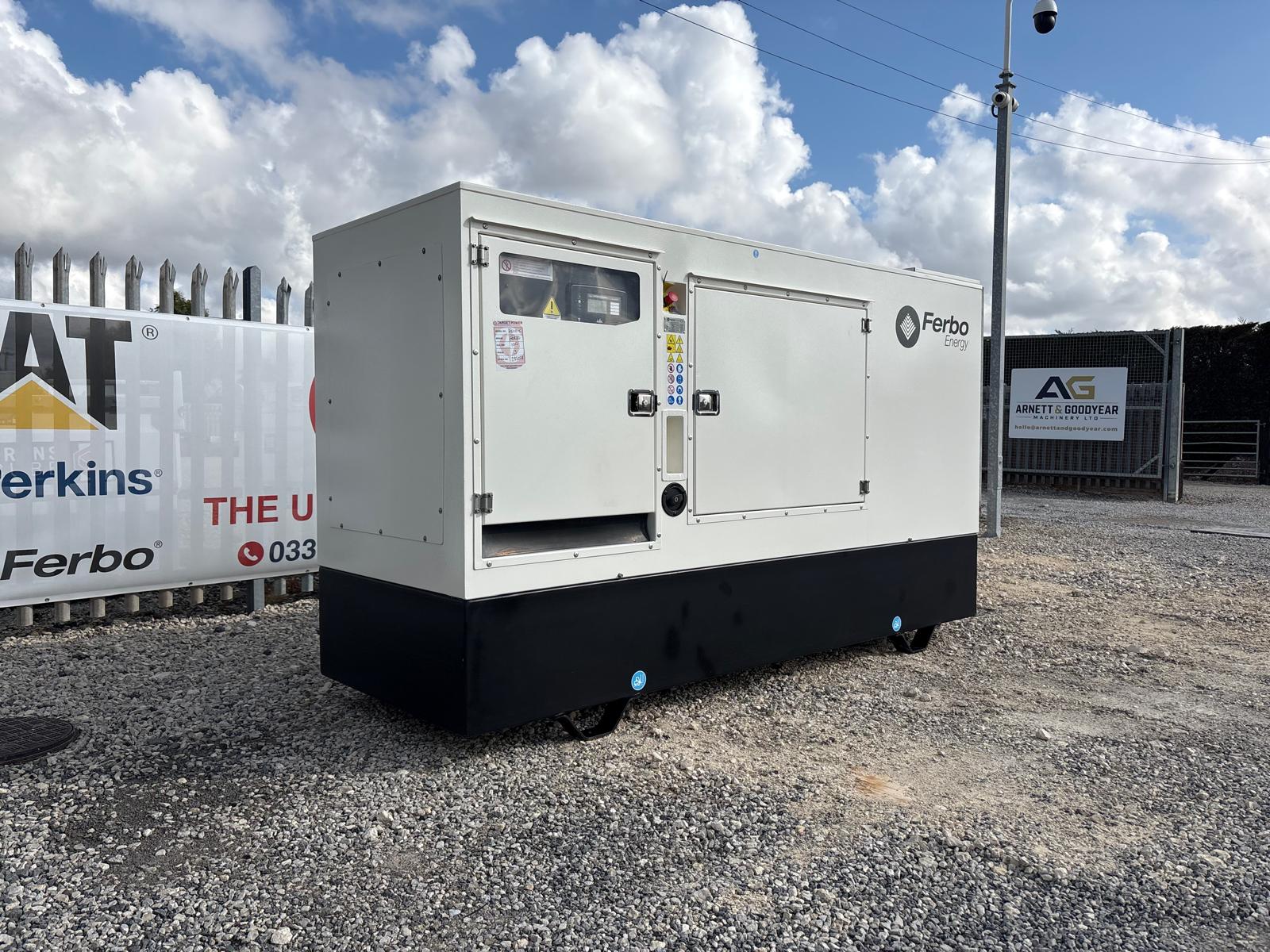
Ferbo FE110-I Prime Advanced
Our Ferbo FE110-I Prime Advanced is a 100kVA-class industrial diesel generator powered by a genuine FPT Iveco engine.
In the supplied comparison, the FPT N45TM2A achieves the lowest stated fuel consumption at 75% prime load, using just 16.2 litres per hour.
At approximately 60kW electrical output, this equates to 0.270 litres per kWh.
For businesses using a generator regularly, fuel consumption is an important factor in total ownership costs. A saving of even one litre per hour can make a noticeable difference over a long operating period.
FPT Iveco engines are used across industrial, agricultural and power generation applications, making them a recognised option for customers seeking an industrial diesel engine.
The Ferbo Prime Advanced range also focuses on the construction of the complete generator, including the acoustic enclosure, electrical equipment, fuel system and maintenance access.
Depending on the selected specification, features and options can include:
- Sound-attenuated acoustic enclosure.
- Bunded base fuel tank.
- External fuel tank connections.
- Deep Sea Electronics generator controller.
- ABB circuit breaker.
- Remote monitoring options.
- Additional socket packages and electrical equipment.
For customers requiring a 100kVA generator for regular prime-power operation, the FPT-powered Ferbo is particularly worth considering where fuel efficiency is a major priority.
View the Ferbo FE110-I 100kVA FPT Iveco Generator →
Perkins 100kVA Diesel Generator – 17.1 L/h
Ferbo FE110-P Prime Advanced
Perkins is one of the best-known diesel engine manufacturers in the industrial generator market.
The Perkins 1104C-44TAG2 has a stated fuel consumption of 17.1 litres per hour at 75% load in this comparison.
At approximately 60kW output, this corresponds to 0.285 L/kWh.
That places Perkins second among the five engines compared.
The difference between Perkins and FPT is only 0.9 litres per hour, making both engines competitive options where running costs are important.
Perkins engines are widely used in industrial equipment and diesel generators. Their established service and parts infrastructure can be an advantage for customers planning long-term ownership.
Our Ferbo FE110-P Prime Advanced combines a genuine Perkins engine with a professional generator package intended for prime-power applications.
View the Ferbo FE110-P 100kVA Perkins Generator →
Hyundai 100kVA Diesel Generator – 17.4 L/h
Hyundai FDD110P-FMT – SP344CC Engine
Another option available from Target Power Generators is the Hyundai FDD110P-FMT 100kVA diesel generator, powered by the Hyundai SP344CC diesel engine.
At 75% load, the Hyundai SP344CC has a stated fuel consumption of 17.4 litres per hour.
Based on approximately 60kW electrical output, this equates to 0.290 litres per kWh.
In our comparison, Hyundai achieves the same stated fuel consumption as the Baudouin 4M11G120/5, placing both engines joint third among the five engines compared.
Compared with the other engine options, the Hyundai consumes:
- 1.2 litres per hour more than the FPT Iveco N45TM2A.
- 0.3 litres per hour more than the Perkins 1104C-44TAG2.
- The same stated amount as the Baudouin 4M11G120/5.
- 0.6 litres per hour less than the Cummins 6BTA5.9-G5.
Over 2,000 operating hours at the stated 75% load, the Hyundai would consume approximately 34,800 litres of diesel, compared with 32,400 litres for the FPT Iveco.
At an illustrative diesel cost of £1.20 per litre, this represents an additional £2,880 in fuel expenditure over that period.
However, fuel consumption is only one factor when selecting a generator. Customers should also compare the complete generator specification, purchase price, warranty, service support and suitability for the intended application.
View the Hyundai FDD110P-FMT 100kVA Diesel Generator →
Baudouin 100kVA Diesel Generator – 17.4 L/h
The Baudouin 4M11G120/5 has a stated fuel consumption of 17.4 litres per hour at 75% load in the supplied data.
This equates to approximately 0.290 L/kWh at 60kW output.
Its stated consumption is identical to the Hyundai SP344CC and only 0.3 L/h higher than Perkins.
Baudouin-powered generators can be an alternative for customers balancing engine specification, generator construction and purchase price.
However, a generator should not be selected solely because its initial purchase price is lower.
For a generator operating regularly, fuel consumption, service intervals, parts availability and warranty support can all influence the overall cost of ownership.
Over 2,000 hours at the stated 75% load, the Baudouin would consume approximately 34,800 litres of diesel.
Compare Our 100kVA Diesel Generator Options →
Cummins 100kVA Diesel Generator – 18.0 L/h
Ferbo FE110-C Prime Advanced
The Cummins 6BTA5.9-G5 is a recognised industrial diesel engine used in power generation applications.
In this comparison, it has a stated consumption of 18.0 litres per hour at 75% prime load, equivalent to approximately 0.300 L/kWh.
Although this is the highest stated consumption among the five engines compared, fuel efficiency is not the only reason customers choose Cummins.
Customers may prefer Cummins because of its established engine reputation, familiarity with the product, service arrangements or requirements for a particular project.
Our Ferbo FE110-C Prime Advanced uses a genuine Cummins G-Drive engine.
This distinction is important to customers who specifically require genuine Cummins equipment.
At 2,000 operating hours and the stated load, the Cummins would consume approximately 36,000 litres of diesel, compared with 32,400 litres for the FPT Iveco.
That represents a difference of approximately 3,600 litres over the period.
For applications where fuel consumption is the main priority, this difference deserves consideration. For other applications, the complete generator specification and customer preferences may carry more weight.
View the Ferbo FE110-C 100kVA Cummins Generator →
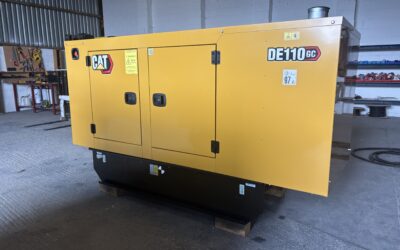
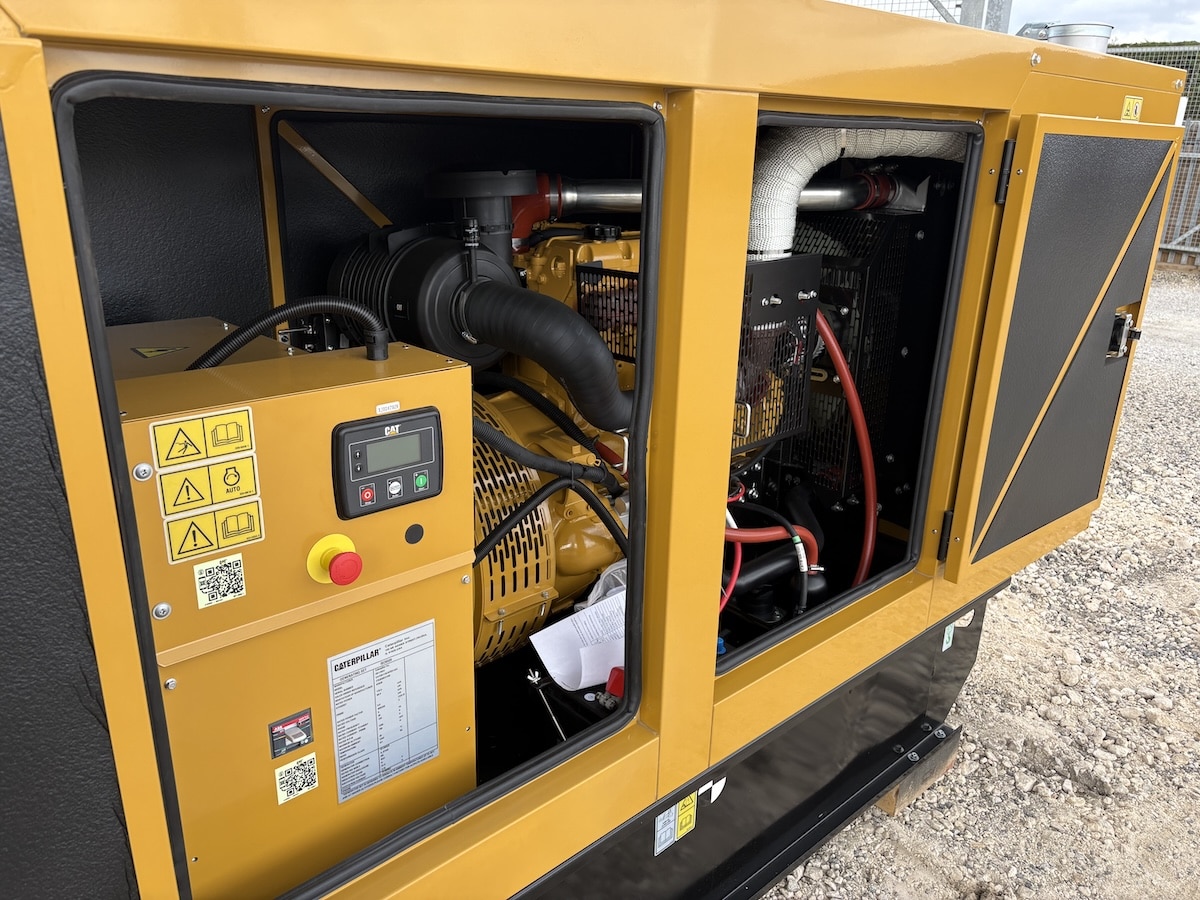
Caterpillar 100kVA Diesel Generators – CAT DE110GC vs DE110E2
Caterpillar is another important manufacturer to consider when purchasing a 100kVA-class diesel generator.
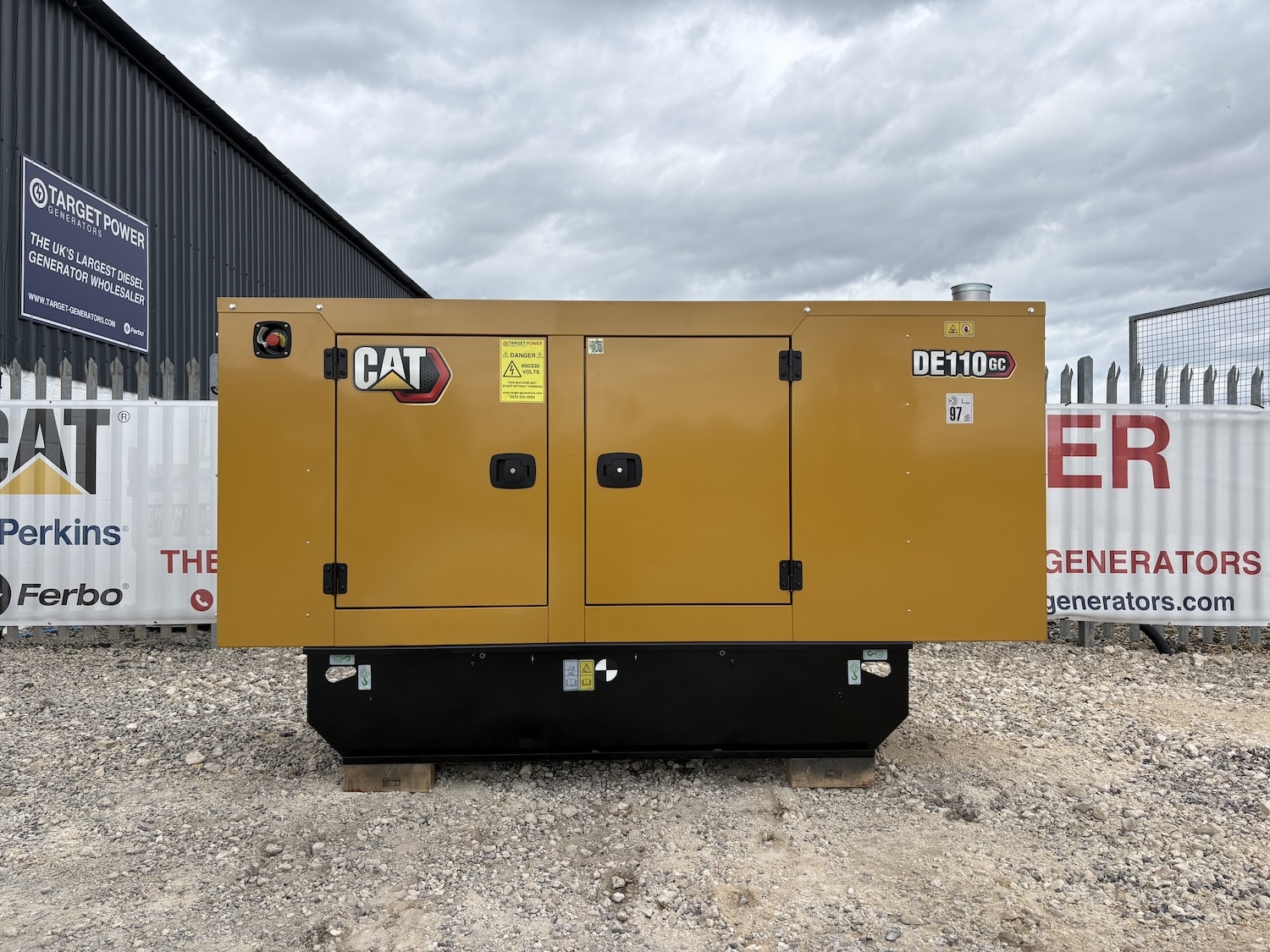
At Target Power Generators, we supply genuine Caterpillar diesel generators, including the CAT DE110GC and CAT DE110E2.
Both are relevant to customers looking for a 100kVA-class generator, but their specifications and intended applications should be assessed individually.
Caterpillar DE110GC
The CAT DE110GC is part of Caterpillar’s GC Series and is a popular option for commercial and industrial standby power applications.
It uses a Caterpillar 4.4-litre diesel engine and is available in a sound-attenuated enclosure.
The DE110GC is particularly relevant for customers looking for a generator to provide backup power during mains failures.
For standby applications, annual fuel consumption may be less important than generator reliability, correct sizing, automatic starting and the complete installation specification.
View the Caterpillar DE110GC Generator →
Caterpillar DE110E2
The CAT DE110E2 is another Caterpillar diesel generator available for customers requiring a 100kVA-class power solution.
When choosing between Caterpillar models, it is important to compare their published duty ratings, fuel consumption, enclosure specification and suitability for the intended operating conditions.
We have not assigned either CAT model a position in the five-engine fuel-efficiency ranking because directly comparable 75% prime-load figures have not been established for these exact models.
View the Caterpillar DE110E2 Generator →
See All Our 100kVA Diesel Generators for Sale →
100kVA Diesel Generator Running Costs – 500, 1,000 and 2,000 Hours
The difference between engine fuel-consumption figures becomes clearer when calculated over longer operating periods.
For this example, we have assumed each generator operates at 75% of its 100kVA prime rating throughout the period.
| Engine | 500 Hours | 1,000 Hours | 2,000 Hours |
|---|---|---|---|
| FPT Iveco | 8,100 L | 16,200 L | 32,400 L |
| Perkins | 8,550 L | 17,100 L | 34,200 L |
| Hyundai | 8,700 L | 17,400 L | 34,800 L |
| Baudouin | 8,700 L | 17,400 L | 34,800 L |
| Cummins | 9,000 L | 18,000 L | 36,000 L |
At 2,000 operating hours, the difference between the stated FPT and Cummins consumption is approximately 3,600 litres of diesel.
At an illustrative diesel cost of £1.20 per litre, that represents a potential fuel expenditure difference of £4,320.
Over 5,000 operating hours, the same stated difference becomes approximately 9,000 litres, or £10,800 at that assumed fuel price.
These are illustrative calculations, not guaranteed savings. Actual consumption depends on electrical load, generator configuration, operating conditions, fuel specification and maintenance.
Example Annual Fuel Cost at 2,000 Hours
| Engine | Fuel Used | Cost at £1.20/L |
|---|---|---|
| FPT Iveco | 32,400 L | £38,880 |
| Perkins | 34,200 L | £41,040 |
| Hyundai | 34,800 L | £41,760 |
| Baudouin | 34,800 L | £41,760 |
| Cummins | 36,000 L | £43,200 |
Illustrative fuel costs assume constant 75% prime load and a fixed diesel price of £1.20/L. They exclude delivery, storage, servicing, AdBlue where applicable, and other operating expenses.
Why Generator Load Matters for Fuel Efficiency
A diesel generator does not consume the same amount of fuel at every load.
Its consumption generally increases as more electrical power is demanded, but the amount of fuel consumed per kilowatt-hour can also change.
For example, a generator running at 25% load may use fewer litres per hour than it does at 75% load, but it may use more fuel relative to the amount of electricity being produced.
This is one reason why correctly sizing a generator is important.
An unnecessarily oversized generator may operate at a low load for extended periods, potentially reducing efficiency and, depending on the engine and operating conditions, contributing to problems associated with prolonged light-load operation.
However, a generator must also be large enough to handle motor starting currents, load steps and the required electrical demand.
For applications involving pumps, compressors, motors and other equipment with high starting currents, selecting a generator purely from the running kW figure can lead to an undersized installation.
At Target Power Generators, we recommend assessing the actual load profile rather than simply purchasing the largest generator within budget.
Why Fuel Efficiency Is Not Everything
Although fuel consumption is an important consideration, the engine is only one part of a complete diesel generator.
Two generators may use similar engines but have very different specifications, construction quality and operating features.
When comparing 100kVA generators, we recommend looking at the complete package.
1. Engine and Alternator Quality
The engine and alternator are two of the most important components in a diesel generator.
Recognised engine and alternator manufacturers can provide advantages in technical documentation, service support and parts availability.
For example, our Ferbo Prime Advanced range uses genuine industrial engines and recognised alternator manufacturers, with the exact combination depending on the model.
2. Fuel Tank and Bunding
Fuel tank capacity affects how long the generator can operate before refuelling.
For prime-power applications, external fuel tank connections may be useful where longer operating periods are required.
The fuel storage arrangement should also be suitable for the installation and applicable environmental requirements.
3. Controller and Electrical Protection
The generator controller is responsible for monitoring operating conditions and managing starting, stopping and protective functions.
Depending on the generator specification, options may include Deep Sea Electronics controllers, remote monitoring, automatic start capability and ABB circuit breakers.
These features can be particularly valuable for unattended or standby installations.
4. Acoustic Performance
Generator noise can be important for construction sites, events, agricultural properties and commercial premises.
When comparing generators, check the stated noise level and the distance and operating conditions at which it was measured.
Two generators described as ‘silent’ can have significantly different measured noise levels.
5. Service Access and Long-Term Maintenance
A generator operating thousands of hours each year will require routine servicing.
Good access to filters, oil drains, cooling components and electrical equipment can reduce the time required for maintenance.
It is also worth considering the availability of service parts and technical support before purchasing.
Read Our Guide: What Makes a Premium Diesel Generator? →
100kVA Prime Power vs 110kVA Standby Power
When comparing generator fuel consumption, it is important to understand the difference between prime and standby power ratings.
Prime power is intended for applications involving regular operation under the manufacturer’s specified variable-load duty conditions.
Standby power is intended for emergency backup operation, with limitations on loading and annual operating hours as specified by the manufacturer.
A generator advertised as 110kVA standby may have a prime rating of 100kVA, but this must be checked against the exact manufacturer’s data sheet.
The fuel comparison in this article is based on a common 100kVA prime-power reference, not 75% of a 110kVA standby rating.
For customers buying a generator to run every day, prime-power suitability and expected operating hours should be discussed before selecting a model.
What Is a 100kVA Diesel Generator Used For?
100kVA diesel generators are used across a wide range of industries.
Construction Sites
They can provide temporary power for site distribution, offices, welfare facilities, lighting and selected construction equipment.
Where cranes, pumps or other motor-driven equipment are involved, starting currents and load changes must be considered.
Agriculture and Farms
100kVA generators are used for agricultural applications including farm backup power, grain handling, pumps and other electrical equipment.
Automatic transfer switches can be supplied for installations requiring automatic backup during mains power failures.
Commercial and Industrial Backup
Businesses may use a 100kVA generator to support essential equipment during power outages.
The required generator size depends on which loads must remain operational and how the installation is arranged.
Events and Temporary Power
Rental-spec 100kVA generators can be configured with socket packages, external fuel connections and other equipment suited to temporary installations.
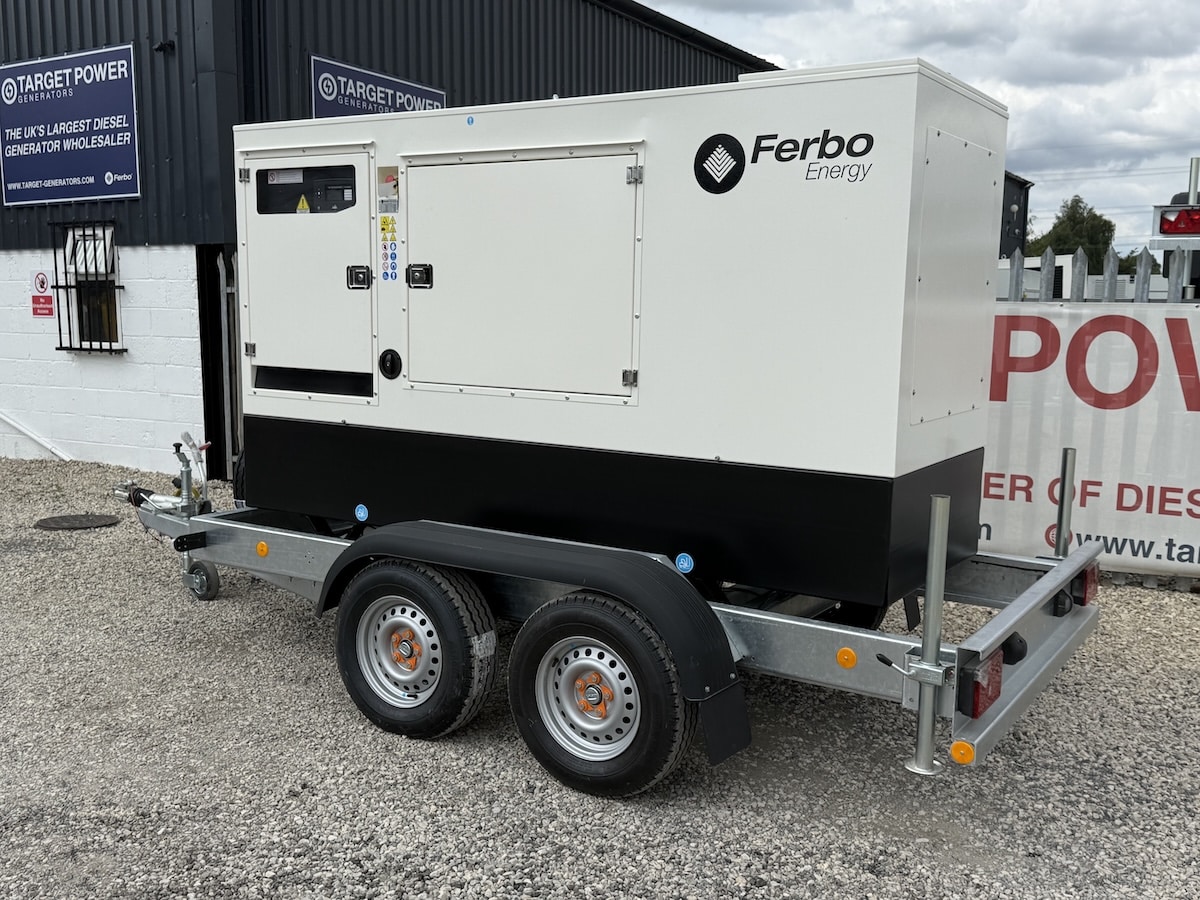
Trailer-mounted options may also be available depending on the generator’s weight and trailer specification.
Off-Grid and Prime Power
For applications without a suitable mains electricity connection, a 100kVA generator may be used as a primary source of electricity.
In these circumstances, fuel efficiency, service intervals and operating costs become particularly important.
Which 100kVA Diesel Generator Should You Buy?
The best generator depends on how it will be used.
If the generator is expected to operate for thousands of hours annually, the FPT Iveco option deserves particular consideration because it has the lowest stated 75% load consumption in this five-engine comparison.
The Perkins option is also competitive, with a relatively small stated difference in consumption.
Hyundai and Baudouin share third place in the supplied figures, both consuming 17.4 L/h at the stated load.
Cummins may be preferred by customers who specifically require a genuine Cummins G-Drive engine or already operate Cummins-powered equipment.
For standby applications, Caterpillar’s DE110GC and DE110E2 should also be considered, with the exact model selected according to its duty rating and installation requirements.
Ultimately, a good purchasing decision should account for:
- Actual electrical demand and starting currents.
- Prime or standby operation.
- Expected annual running hours.
- Fuel consumption at the expected operating load.
- Engine and alternator specification.
- Noise and enclosure requirements.
- Fuel storage and external tank connections.
- Warranty, maintenance and service support.
- Purchase price and total ownership costs.
Browse Our Full Range of 100kVA Diesel Generators for Sale →

100kVA Generator Fuel Consumption – Frequently Asked Questions
How much diesel does a 100kVA generator use per hour?
At 75% prime load, the five engine options in this comparison consume between 16.2 and 18.0 litres per hour according to the supplied figures.
Actual fuel consumption depends on the engine, generator configuration and electrical load.
Which 100kVA diesel generator uses the least fuel?
Of the five engines compared, the FPT Iveco N45TM2A has the lowest stated fuel consumption at 75% prime load, at 16.2 L/h.
This does not establish it as the most fuel-efficient 100kVA generator across every manufacturer or operating condition.
How much fuel does a Hyundai 100kVA generator use?
The Hyundai SP344CC, used in the FDD110P-FMT generator, has a stated consumption of 17.4 litres per hour at 75% load.
That places it joint third with the Baudouin 4M11G120/5 in this comparison.
How much does it cost to run a 100kVA diesel generator?
Using an illustrative diesel price of £1.20 per litre, a generator consuming 16.2 L/h would cost approximately £19.44 per hour in diesel at the stated load.
A generator consuming 17.4 L/h would cost approximately £20.88 per hour, while one consuming 18.0 L/h would cost approximately £21.60 per hour.
These figures exclude servicing and other operating costs.
How much electricity does a 100kVA generator produce?
At a power factor of 0.8, a 100kVA generator produces approximately 80kW of real electrical power at rated output.
At 75% load, this is approximately 60kW.
Is a 100kVA generator suitable for continuous use?
A 100kVA prime-rated generator may be suitable for regular operation within the manufacturer’s specified duty conditions.
However, prime power and continuous power are not interchangeable ratings. The correct duty classification should be confirmed for applications involving constant load or extended operating periods.
Can a 100kVA generator be connected to an automatic transfer switch?
Yes. Many 100kVA generators can be configured with an automatic transfer switch for standby power applications.
The ATS must be correctly rated and compatible with the generator controller and electrical installation.
Conclusion – Comparing 100kVA Diesel Generator Fuel Efficiency
Fuel efficiency is an important factor when choosing a 100kVA diesel generator, especially for businesses that expect to operate the generator regularly.
In our five-engine comparison at 75% prime load:
- FPT Iveco N45TM2A: 16.2 L/h.
- Perkins 1104C-44TAG2: 17.1 L/h.
- Hyundai SP344CC: 17.4 L/h.
- Baudouin 4M11G120/5: 17.4 L/h.
- Cummins 6BTA5.9-G5: 18.0 L/h.
The FPT Iveco has the lowest stated consumption among these five engines, but the difference between some options is relatively small and should be considered alongside data-sheet tolerances and actual operating conditions.
Caterpillar remains another relevant option, particularly for customers looking for a standby generator, although comparable fuel figures are needed before including the CAT models in this numerical ranking.
At Target Power Generators, we supply genuine diesel generators from leading manufacturers and can help customers compare the complete specification, not just the fuel consumption figure.
100kVA Diesel Generators for Sale – UK Stock and Worldwide Delivery
Looking to purchase a 100kVA diesel generator?
Target Power Generators supplies industrial diesel generators for prime power, standby power, construction, agriculture, rental and commercial applications.
Our range includes generators powered by FPT Iveco, Perkins, Cummins, Baudouin, Hyundai and Caterpillar engines.
We maintain physical generator stock at our UK facility and can assist with additional equipment including automatic transfer switches, bulk fuel tanks, trailers and electrical accessories.
View All 100kVA Diesel Generators for Sale →
- 100kVA FPT Iveco – Ferbo FE110-I →
- 100kVA Perkins – Ferbo FE110-P →
- 100kVA Hyundai – FDD110P-FMT →
- 100kVA Cummins – Ferbo FE110-C →
- Caterpillar DE110GC →
- Caterpillar DE110E2 →
More Diesel Generator Fuel-Efficiency Guides
Compare fuel consumption across other generator sizes:
- Most Fuel-Efficient 50kVA Diesel Generator →
- Most Fuel-Efficient 60kVA Diesel Generator →
- What Makes a Premium Diesel Generator? →
- See Our Generators Running →
For generator advice, current stock or a quotation, contact Target Power Generators.
Contact Our Generator Sales Team →
Telephone: 0333 0344554
Email: hello@target-generators.com