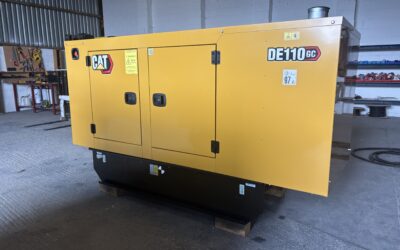
What Makes a Premium Diesel Generator?
The word premium gets used far too easily in the generator industry. A smart paint finish, a recognised engine badge or a long specification sheet does not automatically make a generator a premium product.
For us, a premium diesel generator is a complete package. It should be safe, properly engineered, easy to operate, easy to service, efficient to run and built with components that are supported for years after the initial sale. Just as importantly, it should suit the job it has been bought to do.
We work with generators across standby, prime power, rental, construction, agriculture, industry and export applications, so this guide covers the things we look for when deciding whether a set is genuinely premium rather than simply marketed that way.
Contents
- Compliance and Safety Come First
- The Engine and Alternator Still Matter
- A Premium Generator Should Reduce Running Costs
- The Controller Should Tell You What Is Happening
- What Makes a Premium Standby Generator?
- What Makes a Premium Prime-Power Generator?
- A Premium Rental Generator Combines Both Worlds
- Premium Should Also Mean Lower Noise
- Paint and Corrosion Protection Are Not Cosmetic
- It Should Be Easy and Safe to Move
- Electrical Components Matter
- Parts and Serviceability Are Part of the Product
- Ask How the Generator Is Factory Tested
- Warranty and Manufacturer Confidence
- A Premium Generator Should Hold Its Value
- Premium Also Applies to the Manufacturer
- Premium Does Not Mean Overcomplicated
- Premium Diesel Generator Buying Checklist
- Frequently Asked Questions
1. Compliance and Safety Come First
Before looking at engines, noise levels or paint finish, the generator needs to be safe and suitable for the market in which it is being supplied. In Great Britain, product marking and machinery safety requirements matter, and the exact conformity route depends on the equipment and how it is placed on the market.
A premium manufacturer should be able to provide the correct declaration, manuals and product documentation rather than leaving the customer to work out what applies after delivery.
Electrical installation is another separate consideration. In the UK, BS 7671 is the national standard for electrical installations, so the generator, transfer equipment, sockets and site wiring all need to be considered as part of the complete installation rather than treating the generator as an isolated box.
- Correct product marking and declaration for the market
- Clear English-language manuals and safety information
- Guards around accessible moving or hot parts where required
- Externally accessible emergency stop
- Lockable access doors and safe electrical compartments
- Suitable circuit protection and earth-fault / residual-current protection for the application
- A clear installation and maintenance schedule
2. The Engine and Alternator Still Matter
The engine and alternator are the main drive chain of the generator, so this is where many buyers start. That makes sense, but we would never choose a generator on the engine badge alone.
A premium generator should use an engine with good parts support, proven generator-duty performance and fuel consumption that makes sense for the application. Across the ranges we supply, that can include engines from manufacturers such as Cummins, Perkins, FPT Iveco, Yanmar, Scania, Volvo and Baudouin, depending on the power node and duty.
The alternator is just as important. A good alternator needs stable voltage regulation, suitable insulation and temperature-rise performance, and enough motor-starting capability for the connected load. The best engine in the world does not make up for a poorly specified alternator.
This is why we prefer to look at the complete engine-alternator package, not simply the badge on the canopy.
3. A Premium Generator Should Reduce Running Costs
Purchase price is only the first cost of a generator. Fuel can quickly become the much bigger cost on a prime-running set.
A premium generator should therefore be efficient at the load it is likely to run at, not just at one headline test point. We look closely at fuel consumption at 50%, 75% and 100% load where data is available, because the best engine choice can change depending on the application.
Fuel efficiency is particularly important for off-grid sites, agriculture, construction, rental and continuous-running applications. A small difference in litres per hour becomes significant when the generator is operating for hundreds or thousands of hours.
Where renewable diesel such as HVO is being considered, compatibility should be checked against the specific engine manufacturer and model rather than assumed across an entire brand.
4. The Controller Should Tell You What Is Happening
A premium generator does not need to be complicated to operate. In fact, we normally find the better products are easier to use because the information is presented properly.
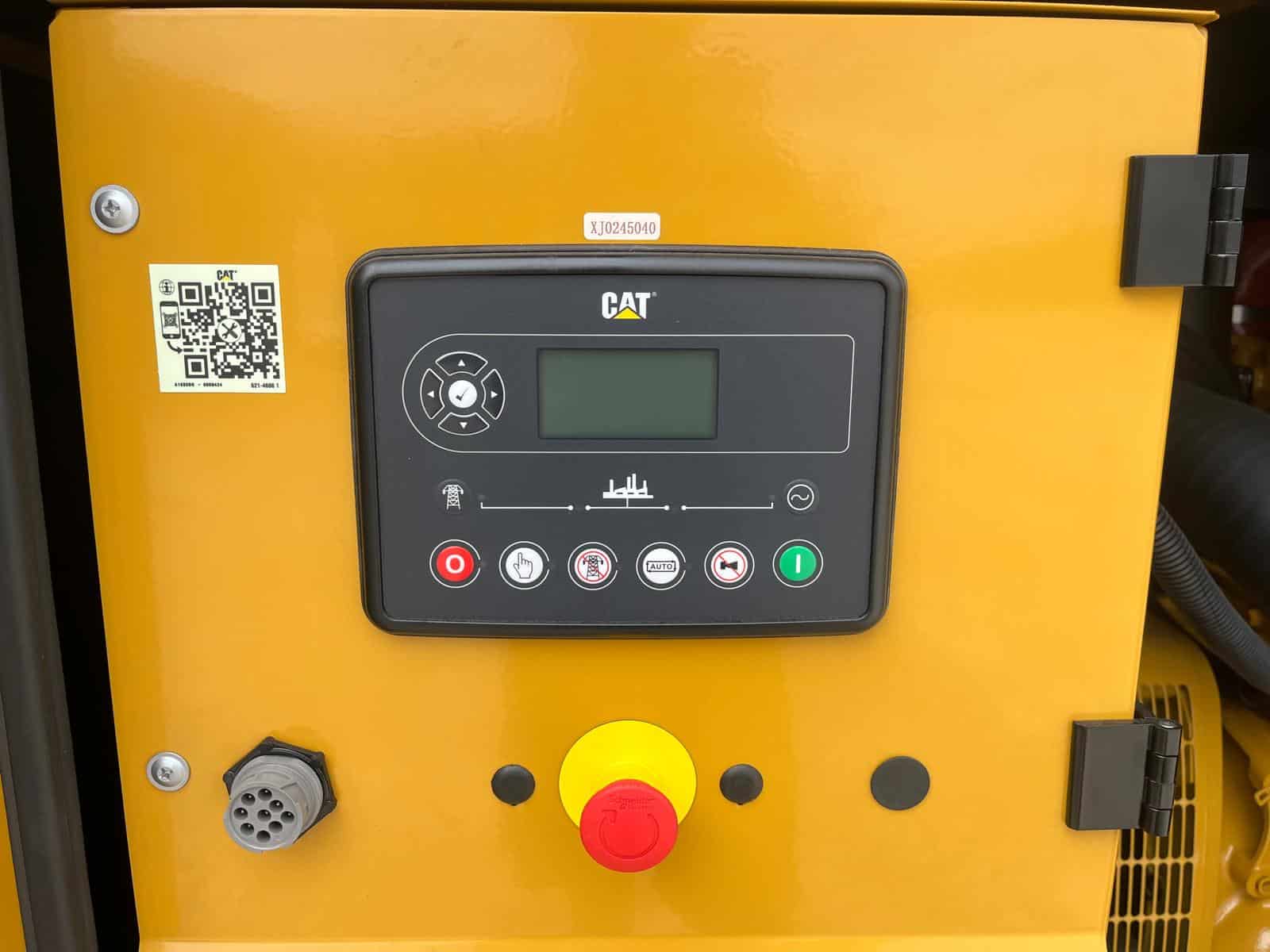
We like established control systems such as Deep Sea Electronics because the interface is familiar to engineers, fault information is clear and a wide range of monitoring, AMF and communications options are available.
A good controller should give the operator useful information rather than simply a few warning lamps. Depending on the engine and controller configuration, this can include coolant temperature, oil pressure, engine speed, battery voltage, voltage, frequency, current, load information, running hours, fuel level and alarm history.
For more advanced applications, remote monitoring can be added. Deep Sea Electronics’ DSE890 MKII, for example, can communicate with supported DSE controllers and send monitoring data through DSEWebNet or compatible third-party systems.


5. What Makes a Premium Standby Generator?
A standby generator has a different job from a prime-running machine. Most of its life may be spent waiting, but when the mains fails it needs to start and take load.
That is why we expect a properly specified standby package to include the equipment required to keep the set ready. Depending on the engine size and application, that normally means a battery charger, an engine or coolant heater where required, an AMF-capable controller and a suitable fuel-containment arrangement.
- AMF-capable control system
- Battery charger
- Coolant or engine heater where appropriate
- Suitable retention or bunded base arrangement
- Low-noise acoustic canopy where the location requires it
- Automatic Transfer Switch compatibility
- Remote monitoring option for critical sites
Noise is particularly easy to overlook on a standby installation because the machine may only run occasionally. Unfortunately, a power cut often happens at the least convenient time, and a very noisy generator beside homes, hotels, hospitals or offices can become a problem quickly.
6. What Makes a Premium Prime-Power Generator?
Prime-running generators need to be treated differently. If the set is expected to run every day, serviceability, fuel systems, sockets, noise and fuel efficiency become much more important.
On many of our Ferbo Prime Advanced specifications, we include external bulk fuel connections and six-way fuel valves so an auxiliary tank can be connected without having to redesign the fuel system on site.
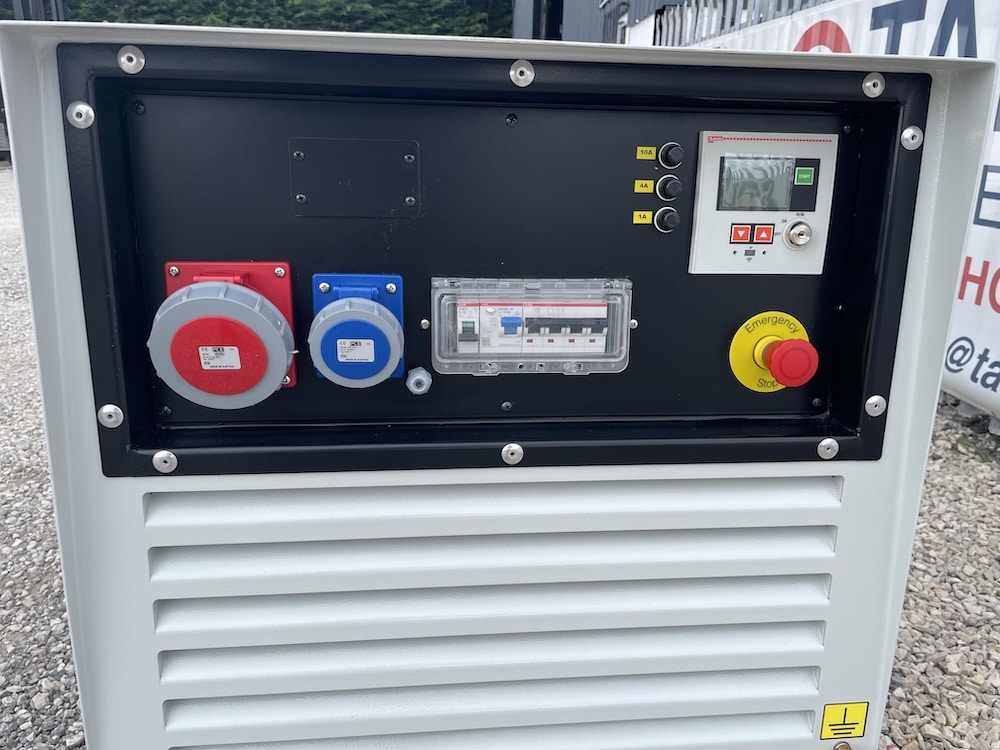
For site and rental use, we also like properly protected socket panels. The required ingress protection depends on the application, but for demanding outdoor environments we prefer robust industrial sockets rather than selecting the cheapest available option.
A premium prime-running set should make it easy to connect the load, easy to refuel or connect an external tank, and easy to service without taking the machine apart.
7. A Premium Rental Generator Combines Both Worlds
Rental generators normally have the hardest life. They are moved regularly, operated by different users, exposed to poor weather and expected to work across very different applications.
For that reason, a good rental specification is usually a combination of prime-power and standby features.
- Bunded or high-capacity containment base
- External bulk fuel connections
- Multiple protected sockets
- Battery isolator
- Coolant heater where required
- Earth-leakage / residual-current protection
- Heavy-duty lifting points
- Forklift pockets where appropriate
- Low-noise canopy
- Remote monitoring / tracking option
On our higher rental specifications we can use remote gateways such as the DSE890 so the generator can be monitored remotely. For fleet operators, knowing where the machine is, how it is operating and whether it has generated an alarm can be extremely valuable.
8. Premium Should Also Mean Lower Noise
Noise pollution is becoming more important, particularly in built-up parts of the UK. A premium generator should not simply rely on a thick-looking canopy; the complete acoustic package needs to work.
Airflow, radiator design, fan speed, exhaust attenuation, anti-vibration mounts and door sealing all affect the final sound level. We covered this in much more detail in our Generator Canopy Designs Explained guide.
Many Ferbo acoustic models we supply operate in the low-to-mid 60 dBA range at 7 metres, depending on model and test conditions. That can make a substantial practical difference compared with a much louder set, especially on events, residential sites, farms and construction projects.
When comparing noise figures, always check the measurement distance and test conditions. A figure measured at 1 metre should not be compared directly with a figure measured at 7 metres. You can see how quiet our Ferbo Perkins FE110-P Diesel generators on our YouTube channel here.


9. Paint and Corrosion Protection Are Not Cosmetic
A generator may spend ten or twenty years outdoors, so paint quality matters. Rust does not normally stop the engine running on day one, but poor corrosion protection can quickly make a generator look old, damage doors and fixings and reduce resale value.
We therefore pay attention to surface preparation, coating system and corrosion category rather than simply the RAL colour.
Selected Ferbo ranges use C4H corrosion-protection systems, while Caterpillar also uses durable enclosure construction and finishing systems across its product ranges. For coastal, agricultural, industrial and rental environments, this is worth considering at the buying stage rather than after corrosion starts.
10. It Should Be Easy and Safe to Move
A surprising number of generators are bought without anyone asking how they will actually be unloaded or positioned.
A premium generator should have clearly designed lifting arrangements suitable for the weight and configuration of the machine. Depending on the model, that may mean a central lifting eye, four-point lifting, forklift pockets or lifting from designated points on the base.
This is particularly important for rooftop generators, rental fleets, construction sites and generators that will eventually be mounted onto trailers.
The lifting arrangement should be documented. The HSE also provides guidance around lifting equipment and machinery, and the manufacturer’s own lifting instructions should always be followed.
11. Electrical Components Are Where Cheap Specifications Often Show
The engine and alternator get most of the attention, but smaller electrical components can be the difference between a generator that is straightforward to own and one that causes regular nuisance faults.
We look at breakers, relays, contactors, protection equipment, cable terminations and socket hardware. Recognised brands cost more, but the benefit is normally better documentation, easier replacement and confidence in the specification.
On many of our Ferbo products we specify ABB protection equipment. ABB also manufactures residual-current devices designed to detect leakage-current imbalance and disconnect the circuit when required.
That does not mean every generator needs exactly the same protection arrangement. The correct protection depends on the earthing system, installation, socket configuration and intended application, which is why the generator and downstream electrical installation need to be designed together.
12. Parts and Serviceability Are Part of the Product
A generator can have excellent headline specifications and still be frustrating to own if a basic filter takes three weeks to obtain or if normal service items are difficult to reach.
We consider parts support one of the clearest signs of a premium generator. Filters, belts, sensors, breakers and other service or wear items should be identifiable and obtainable.
The same applies to the physical layout. Oil filters, fuel filters, air filters, coolant filling points, drain points and batteries should be accessible without dismantling half the canopy.
Target Power supports servicing, maintenance and genuine service parts across the generator ranges we supply.
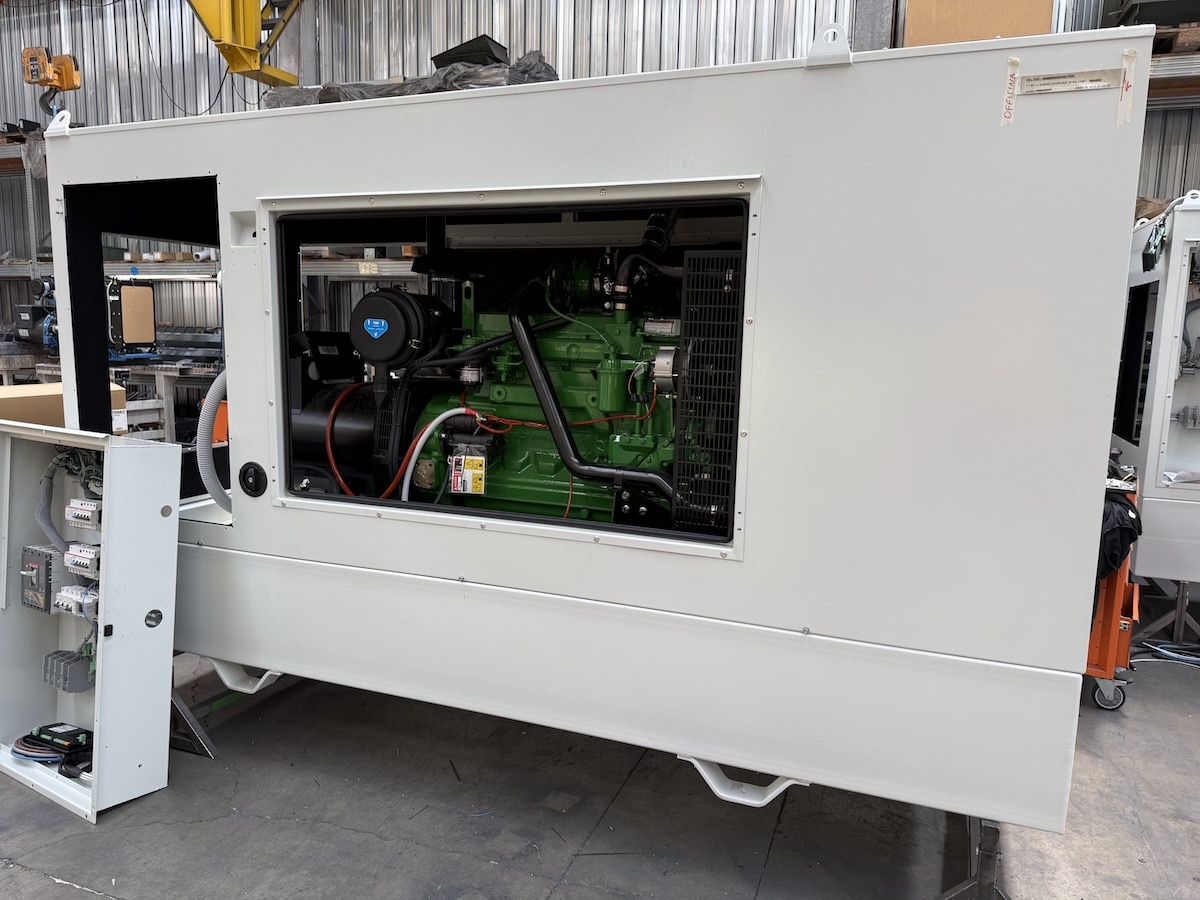
13. Ask How the Generator Is Factory Tested
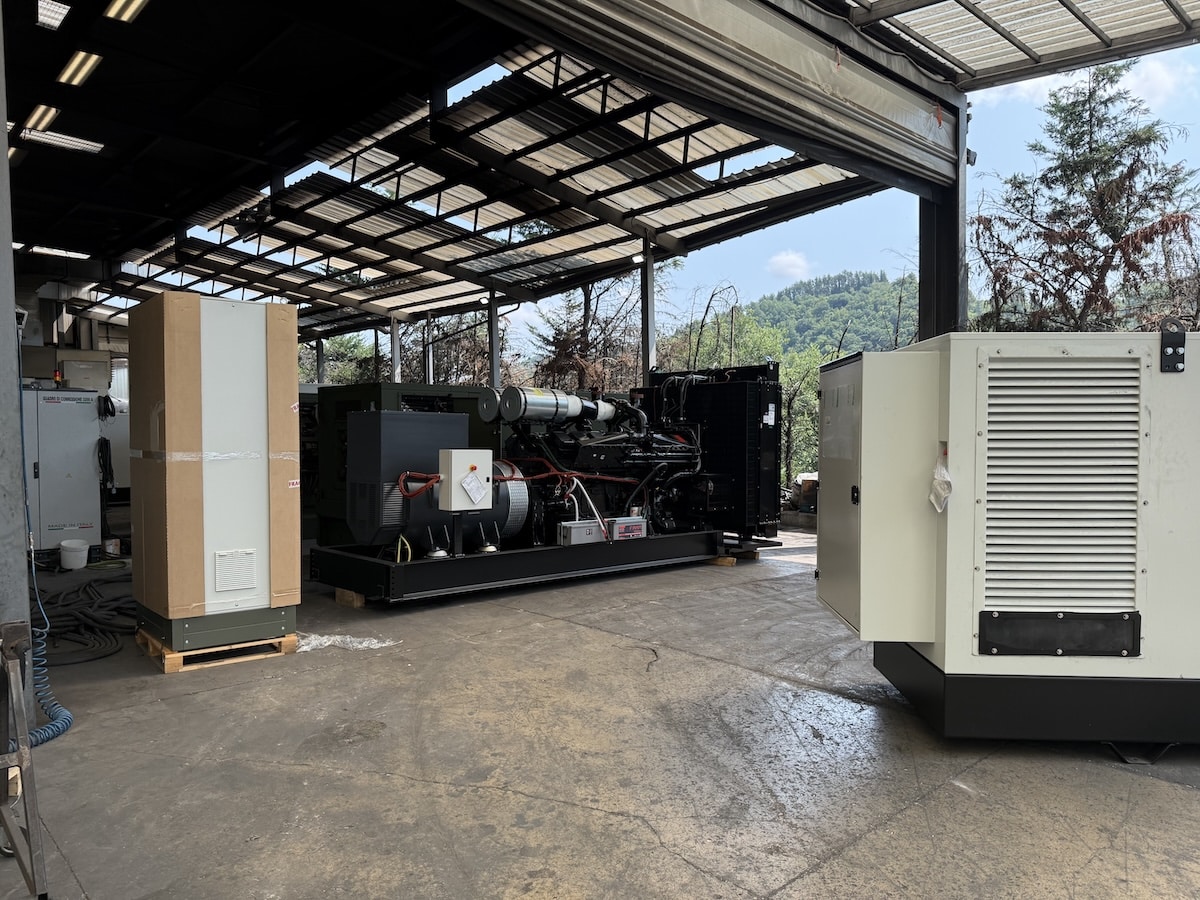
A premium generator should be tested as a complete package, not simply assembled and sent out.
The exact factory procedure varies by manufacturer, but buyers should ask whether the set is run, electrically tested and load tested, and whether a factory test report is available.
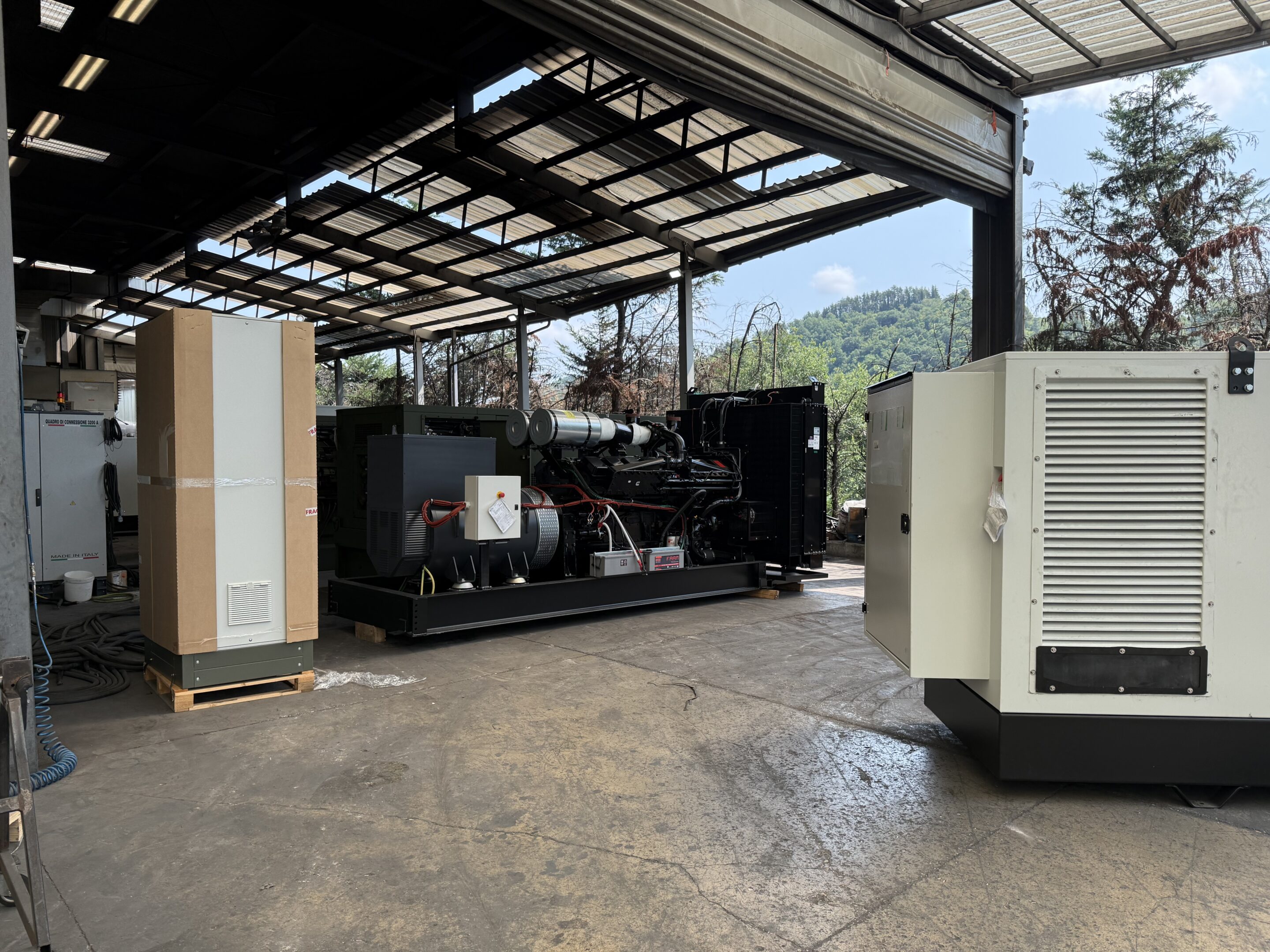
Caterpillar carries out factory testing across its generator ranges. Across the premium products we work with, we also place a lot of importance on load-bank testing and checking the generator as a complete machine before it reaches the customer.
Some projects require additional witness testing or controlled overload testing, but the important point is to ask for the actual procedure rather than assuming every manufacturer tests to the same level. Check out Ferbo’s testing facilities on our YouTube channel here.
14. Warranty Tells You Something About Manufacturer Confidence
Warranty should never be the only reason to buy a generator, but it is a useful indicator of the support behind the product.
Ferbo generators supplied by Target Power currently carry a manufacturer warranty of 2 years or 2,000 operating hours for prime use, and 5 years for standby use, subject to the applicable standby-hour limit and warranty conditions.
You can learn more about the engineering and support behind the range in our Why Choose Ferbo Generators? guide.
Caterpillar also provides generator-set warranty and protection options, with exact terms depending on the product, market and duty.
The important thing is to read the actual terms. A five-year headline is only valuable if you understand the servicing requirements, hour limits, exclusions and claim process.
15. A Premium Generator Should Hold Its Value
Resale value is often forgotten at the buying stage, but it matters to rental companies, contractors and businesses that replace equipment on a planned cycle.
In our experience, recognised brands with strong parts support, good documentation and a canopy that still presents well are easier to remarket. Caterpillar is particularly strong in this respect because it has a large global user base and dealer network.
Ferbo is also a range we like from a long-term ownership point of view because the specification focuses on corrosion protection, recognised components and practical serviceability.
I would be very careful with anyone promising an exact percentage improvement in resale value or lifespan. Condition, hours, age, service history, engine brand, market demand and export demand all affect the eventual value. What we can say is that a well-supported premium machine normally gives you a much better starting point.
16. Premium Also Applies to the Manufacturer
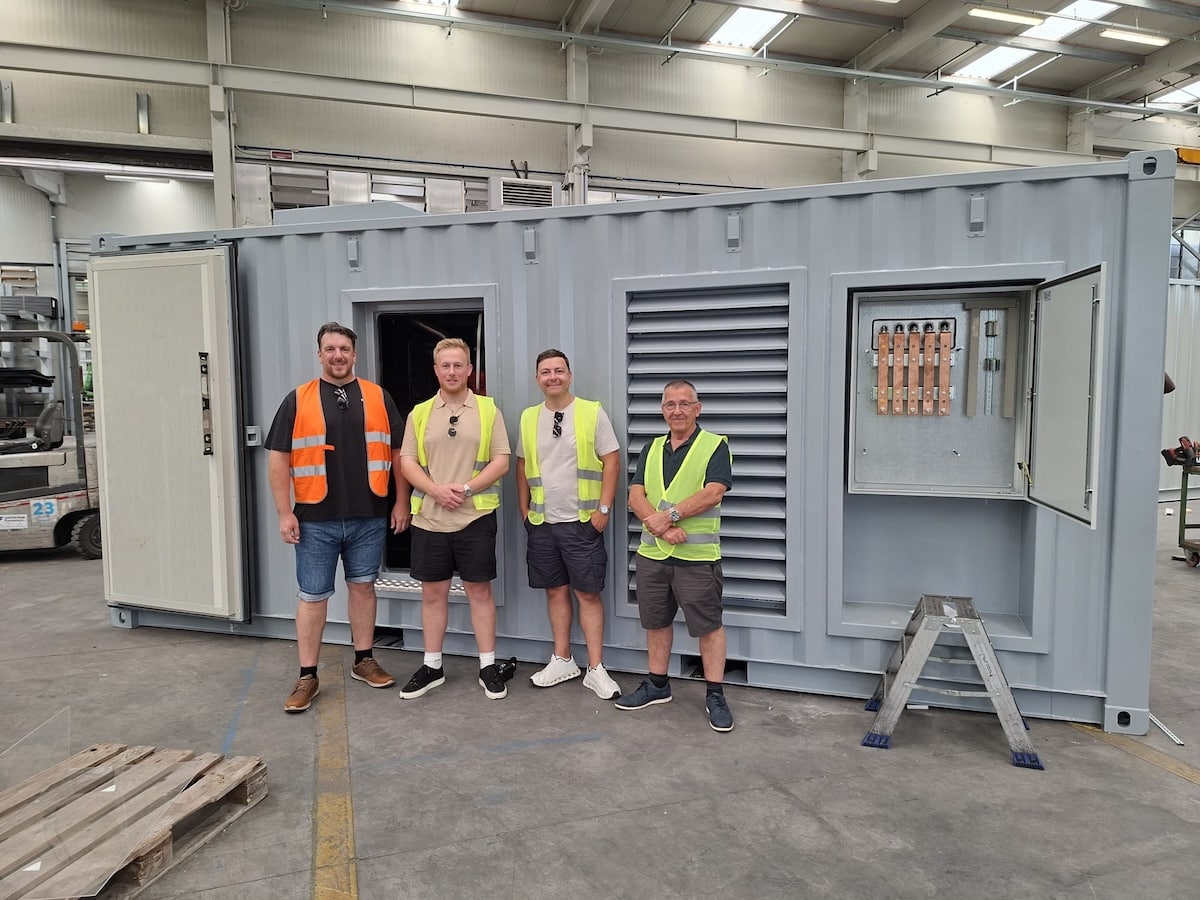
There is nothing about a country of manufacture on its own that makes a product premium or non-premium. Excellent equipment can be manufactured in many parts of the world.
What matters is the manufacturer’s quality system, traceability, workforce standards, supply chain, product compliance and willingness to stand behind the finished product.
For us, the ability to visit factories, understand how the sets are assembled and maintain a direct relationship with the manufacturer is valuable. It gives us more confidence in what we are supplying and makes technical issues easier to resolve if they arise.
17. Premium Does Not Mean Overcomplicated
One final point: premium equipment should be easier to live with, not harder.
A sophisticated control system can still have a simple interface. A premium canopy can still be easy to open. A high-spec fuel system can still be straightforward to connect.
The best generators tend to make complicated engineering feel simple to the operator. Clear controls, sensible service access, useful alarms and proper documentation are all part of that.
Premium Diesel Generator Buying Checklist
- Does the generator have the correct conformity documentation for the market?
- Is the engine supported with parts and service in the areas where it will operate?
- Is the alternator properly specified for the load and motor starting requirements?
- Can the controller show useful engine and electrical data?
- Is the noise figure quoted at a clear distance and test condition?
- Is the paint or corrosion-protection system suitable for the environment?
- Does the fuel system suit standby, prime or rental duty?
- Are sockets and electrical protection appropriate for the application?
- Can the generator be lifted and moved safely?
- Are normal service items easy to access?
- Are filters, sensors and electrical parts readily available?
- Is there a documented factory-test process?
- Is the warranty clear and realistic for the intended duty?
- Will the brand and condition support future resale value?
Premium Does Not Simply Mean Expensive
There are expensive generators that are badly specified, and there are competitively priced generators that are very well engineered. The price tag by itself tells you very little.
For us, premium means the complete product has been thought through: compliance, engine, alternator, controls, noise, fuel system, electrical protection, serviceability, lifting, paint, parts, warranty and long-term support.
That is also why we do not select one engine brand for every power node. Different manufacturers have different strengths, and our job is to specify the right generator for the application rather than simply sell the same badge every time.
Frequently Asked Questions
Is a premium diesel generator always more expensive?
Usually the specification costs more to manufacture, but not always by as much as people expect. The better comparison is whole-life cost: fuel, maintenance, downtime, corrosion, parts availability and resale value can all outweigh a small difference in initial price.
What are the most important components in a premium generator?
The engine and alternator are critical, but the controller, breaker, fuel system, canopy, cooling system, wiring, protection equipment and service access are also important. A premium generator is a complete package.
Should a premium standby generator have a coolant heater?
Where the engine and ambient conditions require it, we normally recommend an engine or coolant heater for standby duty because the generator needs to be ready to start when called upon. The exact requirement depends on the engine and installation.
Should a prime generator have external fuel connections?
For long-running applications they are extremely useful. External feed and return connections allow a suitable auxiliary tank to be connected without repeatedly filling the base tank.
Does a premium generator need Deep Sea Electronics controls?
Not necessarily. There are other capable control manufacturers. We use DSE widely because the products are well known in the UK, provide useful monitoring and communications features and are familiar to many generator engineers.
Does UKCA or CE marking automatically mean a generator is premium?
No. Product marking relates to conformity requirements; it is not a quality grade. A premium generator should meet the applicable legal requirements, but quality also depends on engineering, component selection, testing, support and the suitability of the specification for the application.
What should I ask a generator supplier before buying?
Ask about the engine and alternator model, controller, breaker brand, fuel consumption, sound level and measurement distance, paint specification, fuel system, factory testing, warranty, parts availability, service access and how the set is intended to be lifted and installed.
Continue Your Research
- Explore our diesel generators
- Explore Ferbo diesel generators
- Explore Ferbo Prime Advanced generators
- Why Choose Ferbo Generators?
- Generator Canopy Designs Explained
Useful Standards and Technical References
- GOV.UK – UKCA and CE marking in Great Britain
- IET – BS 7671 Wiring Regulations
- Deep Sea Electronics – DSE890 MKII
- ABB – Residual Current Devices
- Caterpillar – Generator Set Warranty Information
Need Help Choosing the Right Generator?
If you are comparing diesel generators and want a second opinion on the specification, speak to our team. We can help you compare the engine, alternator, controls, fuel system, noise level, warranty and whole-life costs before you make a decision.