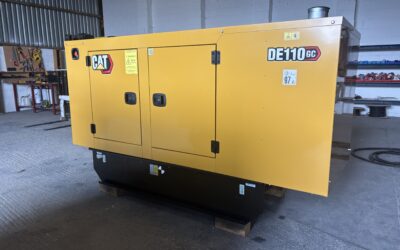
Cummins G-Drive Diesel Generators Explained – Not All Cummins Generators Are the Same
Cummins is probably one of the most recognised diesel engine names in the generator industry.
But there is something we think buyers need to understand:
two generators with a Cummins engine badge are not necessarily the same product.
They may use different Cummins engine families, be manufactured by different generator OEMs, use different alternators, controllers, breakers, fuel systems and canopies, and offer very different noise levels and overall specifications.
We sell Cummins-powered generators ourselves, so this is not an article about telling you Cummins is better or worse than another engine manufacturer.
It is about explaining what you are actually buying.
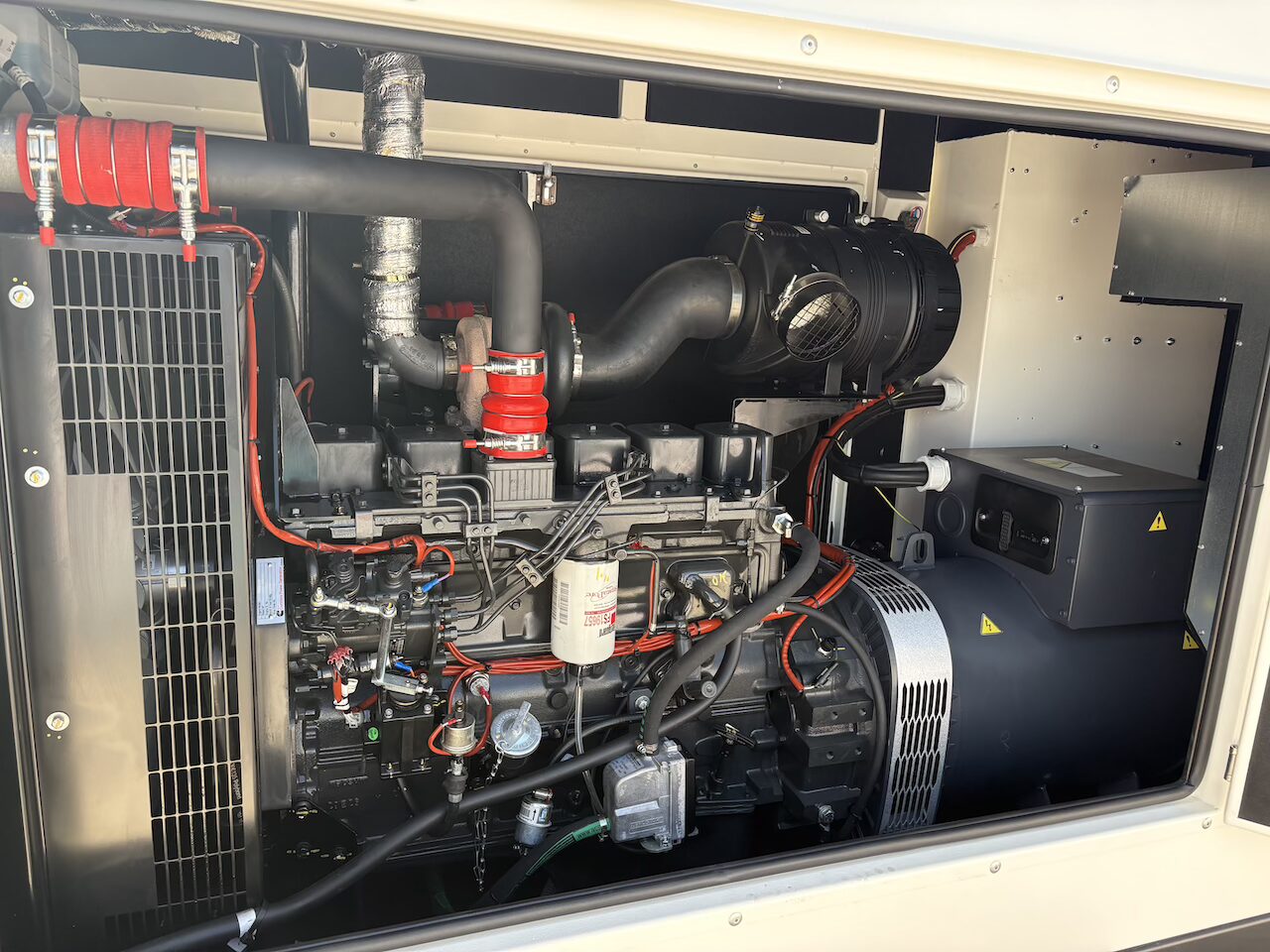
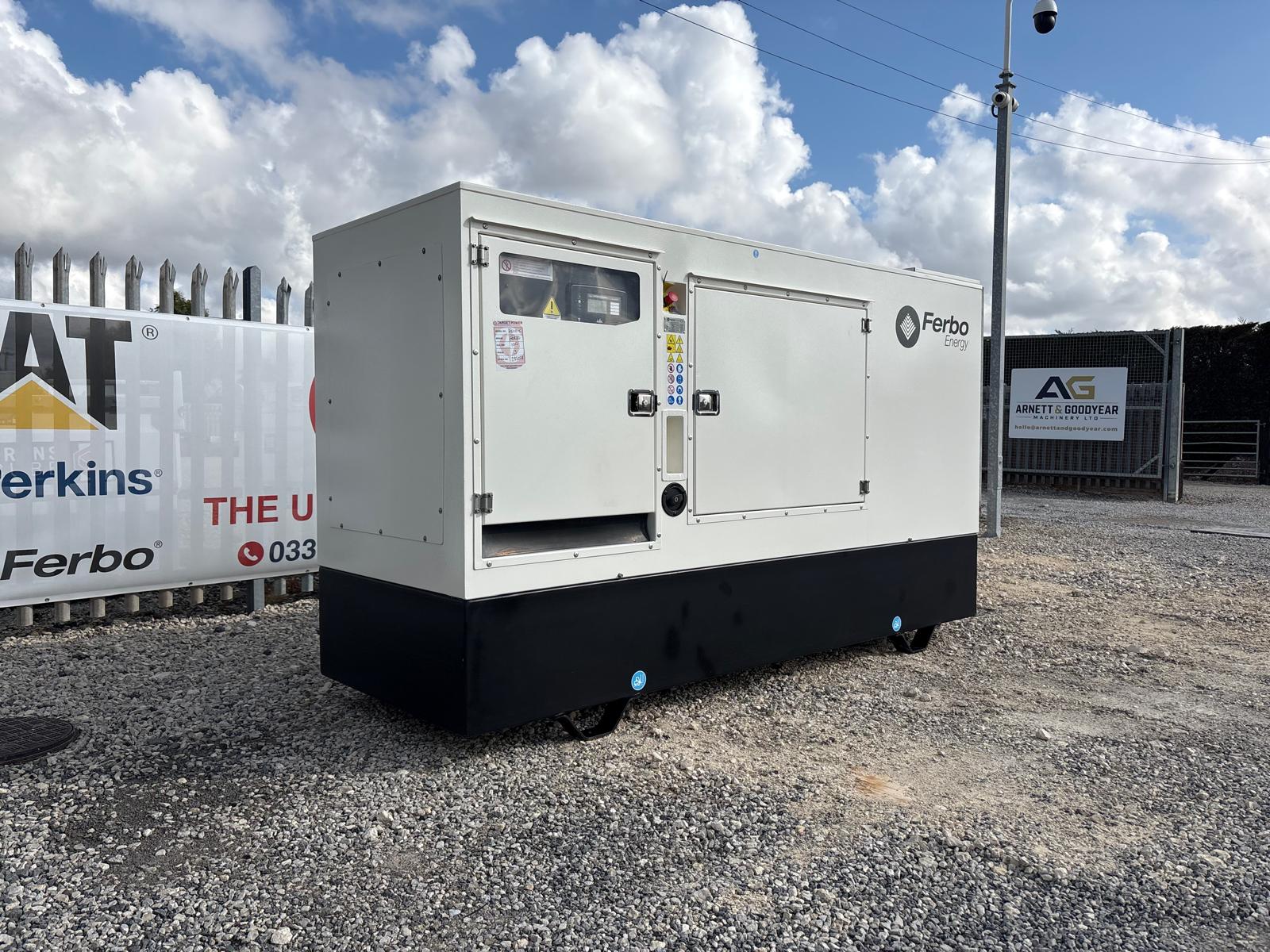
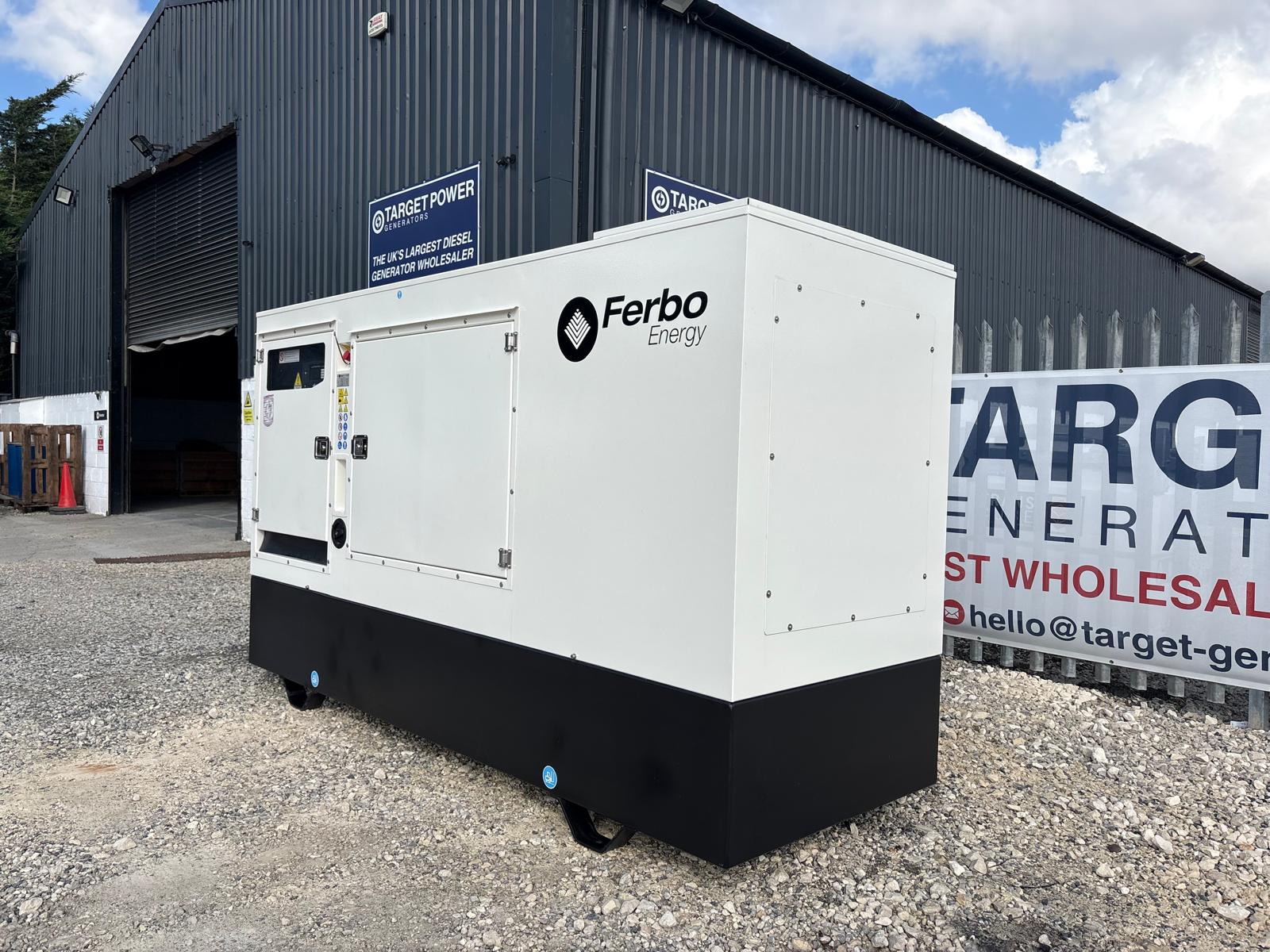
At Target Power Generators, our Ferbo Cummins range uses Cummins G-Drive engines within generator sets manufactured by Ferbo in Italy and configured to our specification for the UK and export markets.
There are other perfectly legitimate ways of buying a Cummins-powered generator, including Cummins-manufactured generator sets, Chinese-manufactured sets using Cummins joint-venture engines, and European generator manufacturers using Cummins engines.
The Cummins badge therefore tells you who is behind the engine. It does not, on its own, tell you who designed and manufactured the complete generator.
Contents
- What Is a Cummins G-Drive Engine?
- Why Are There So Many Different Cummins Generators?
- What Is a DCEC or Dongfeng Cummins Engine?
- Cummins G-Drive vs DCEC – What Is the Difference?
- Who Actually Manufactures a Cummins Generator?
- Why the Complete Generator Package Matters
- Cummins Generator Noise Levels
- Cummins Generator Fuel Consumption
- Why We Use Cummins G-Drive in Our Ferbo Generators
- Our Popular Cummins G-Drive Generator Models
- Cummins for Standby vs Prime Power
- Resale Value and Long-Term Ownership
- What Should You Check Before Buying a Cummins Generator?
- Which Cummins Generator Should You Buy?
- Related Cummins Generator Products & Guides
What Is a Cummins G-Drive Engine?
Cummins manufactures engines for a huge number of applications around the world, including trucks, buses, construction equipment and industrial machinery.
Power generation is a specialist part of that business.
Cummins G-Drive is Cummins’ dedicated range of engines developed for generator-drive applications.
Cummins states that its G-Drive range covers approximately 26kVA to 4,375kVA and is designed for both standby and prime power applications.
That distinction is important.
A generator engine spends its life operating at a controlled engine speed while dealing with electrical loads that can change extremely quickly. Starting motors, pumps, compressors and other equipment can suddenly put a large demand onto the generator.
The engine therefore needs to maintain frequency, accept changing loads and work correctly with the alternator and control system.
That is what the G-Drive range is designed to do.
For customers who specifically want Cummins power, this is why we use Cummins G-Drive engines throughout our Ferbo diesel generator range.
Why Are There So Many Different Cummins Generators?
This is where things become confusing.
Search online for a “100kVA Cummins generator” and you can find machines at very different prices.
They may all genuinely contain a Cummins-branded engine.
But the complete generator can be very different.
Broadly speaking, a buyer may come across:
- Cummins Power Generation complete generator sets
- Independent generator manufacturers using Cummins G-Drive engines
- European OEM generator sets using Cummins engines
- Chinese generator sets using engines produced by Cummins joint ventures in China
- Generator sets assembled by other OEMs for particular markets
None of those descriptions automatically tells you whether a generator is good or bad.
It does tell you that you need to look further than the engine badge.
Who manufactured the generator? What alternator is fitted? What controller does it use? What circuit breaker? How is the canopy built? What is the noise level? Is the fuel tank suitable for your application? What warranty applies to the complete machine?
Those questions tell you considerably more about the generator you are buying.
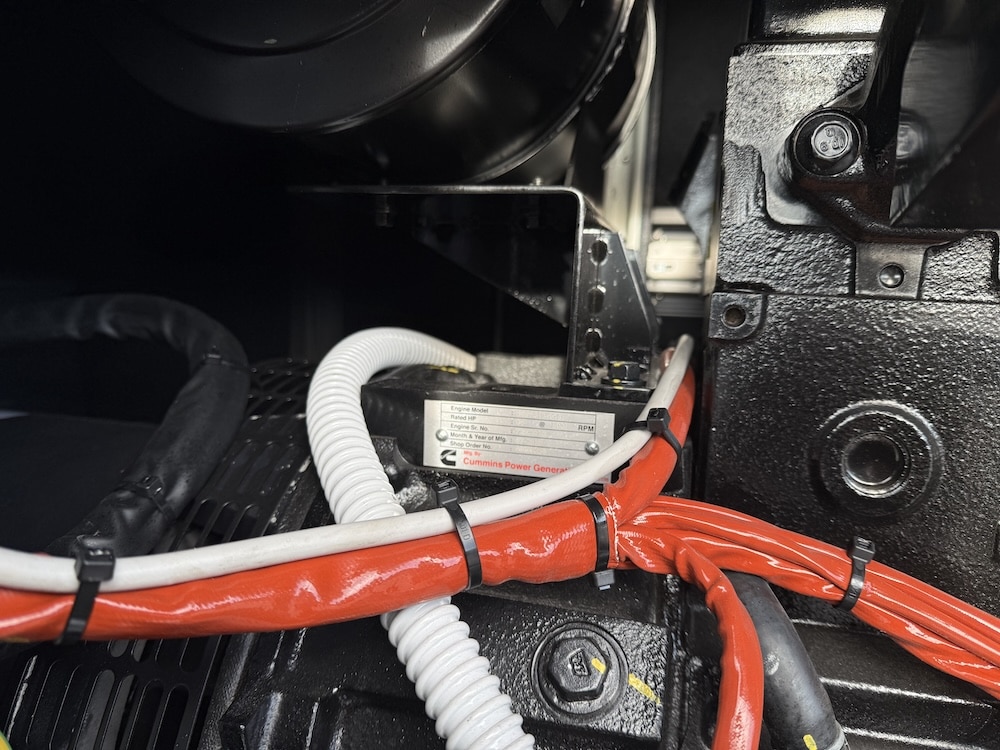
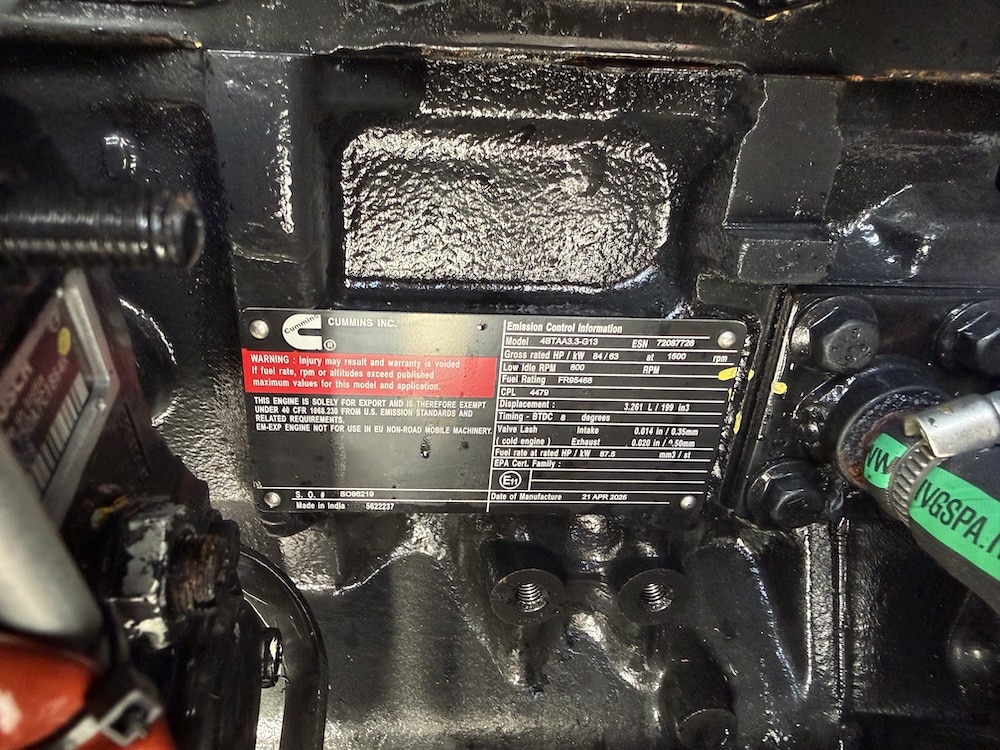
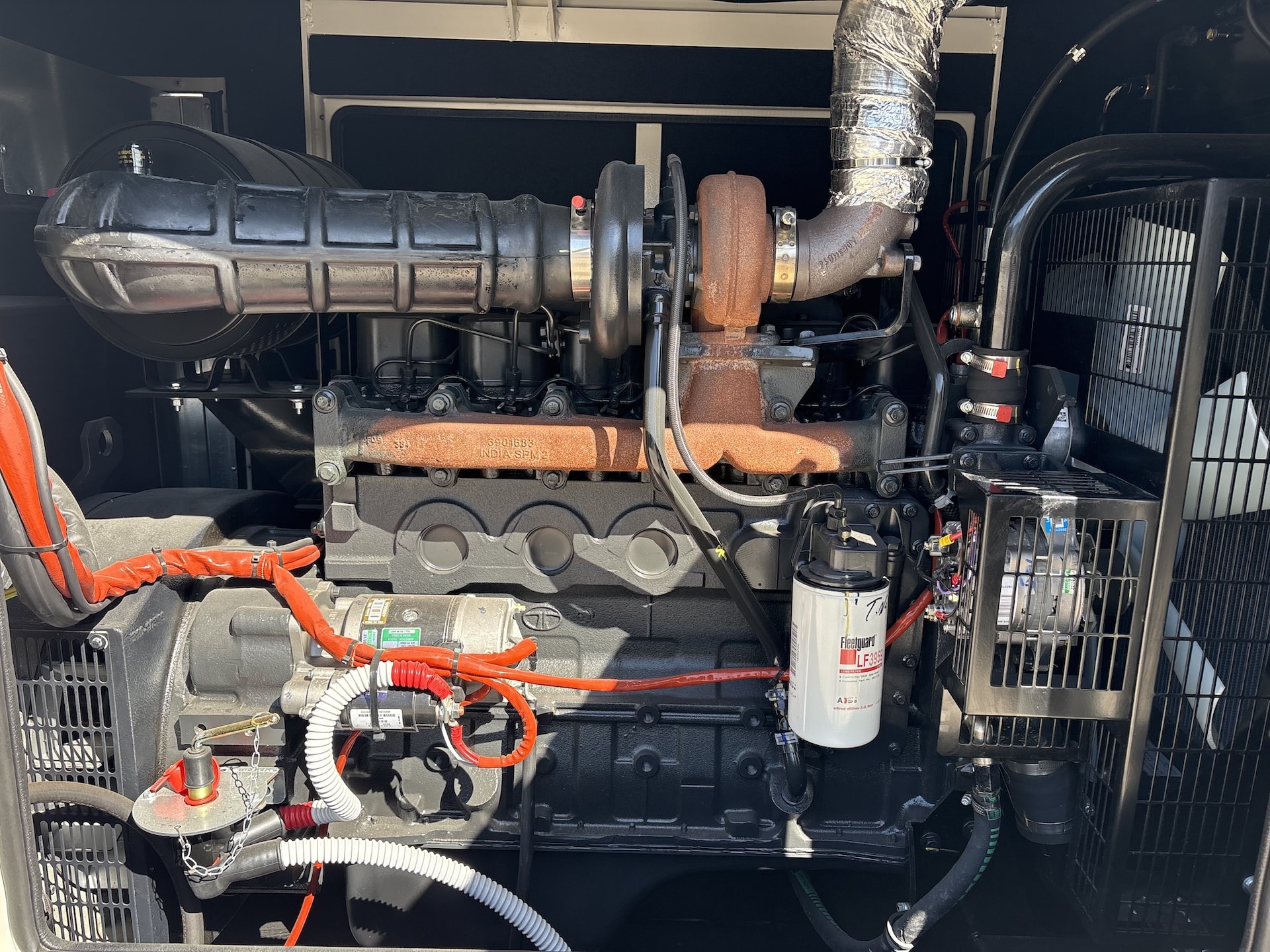
What Is a DCEC or Dongfeng Cummins Engine?
DCEC stands for Dongfeng Cummins Engine Company.
This is important to get right because there is sometimes confusion in the generator market around Chinese Cummins engines.
DCEC is not simply a Chinese company copying a Cummins engine.
Dongfeng Cummins Engine Company is an established Cummins joint venture in China. Cummins confirms that DCEC produces diesel engines used across on-highway and off-highway applications, including power generation.
So a genuine DCEC engine is legitimately part of the wider Cummins manufacturing network.
Where the buying decision becomes more complicated is the complete generator surrounding that engine.
A DCEC-powered generator imported into the UK may have been assembled by a completely separate generator manufacturer.
The canopy, alternator, controller, circuit breaker, fuel tank, wiring, acoustic treatment and electrical protection may therefore have nothing to do with Cummins itself.
That is why we would never recommend choosing a generator purely because the advertisement says “Cummins”.
Cummins G-Drive vs DCEC – What Is the Difference?
Rather than asking whether one is a “real Cummins” and the other is not, we think there is a better question:
What exact engine and generator package am I buying?
| Area | Cummins G-Drive | DCEC / Dongfeng Cummins |
|---|---|---|
| Manufacturer | Cummins G-Drive product range | Dongfeng Cummins Engine Company, a Cummins joint venture |
| Primary focus | Dedicated generator-drive engine range | Engines for multiple on-highway and off-highway applications, including power generation |
| Generator manufacturer | Depends on the OEM purchasing the G-Drive engine | Depends on the company assembling the complete generator |
| Canopy / acoustics | Determined largely by the generator OEM | Determined largely by the generator OEM |
| Controller / breaker / alternator | Depends on complete generator specification | Depends on complete generator specification |
| Warranty | Check engine and generator OEM warranty for the exact machine | Check engine and generator OEM warranty for the exact machine |
This is why comparing two “Cummins generators” purely on price can be misleading.
The engine is only one part of the generator.
Who Actually Manufactures a Cummins Generator?
Another common misconception is that every generator with a Cummins engine is manufactured by Cummins.
It is not.
Cummins manufactures complete Cummins Power Generation generator systems, but it also supplies generator-drive engines to OEM manufacturers around the world.
This means a generator can legitimately be described as Cummins-powered without the complete generator having been manufactured by Cummins.
Our Ferbo Cummins generators are a good example.
The engine is Cummins. The complete generator is manufactured by Ferbo in Italy and configured to our specification.
Other European manufacturers take a similar approach.
For example, there are Cummins-powered generator sets manufactured by European OEMs such as Grupel in Portugal. These machines use Cummins engines but the canopy, base frame, controls, electrical equipment and overall generator package are specified and manufactured by the generator OEM.
Again, this is not necessarily a negative.
It simply means buyers should understand the difference between “Cummins-powered” and “manufactured completely by Cummins Power Generation.”
Why the Complete Generator Package Matters
This is probably the most important part of this article.
If you put exactly the same engine into two different generator packages, you can end up with two very different machines.
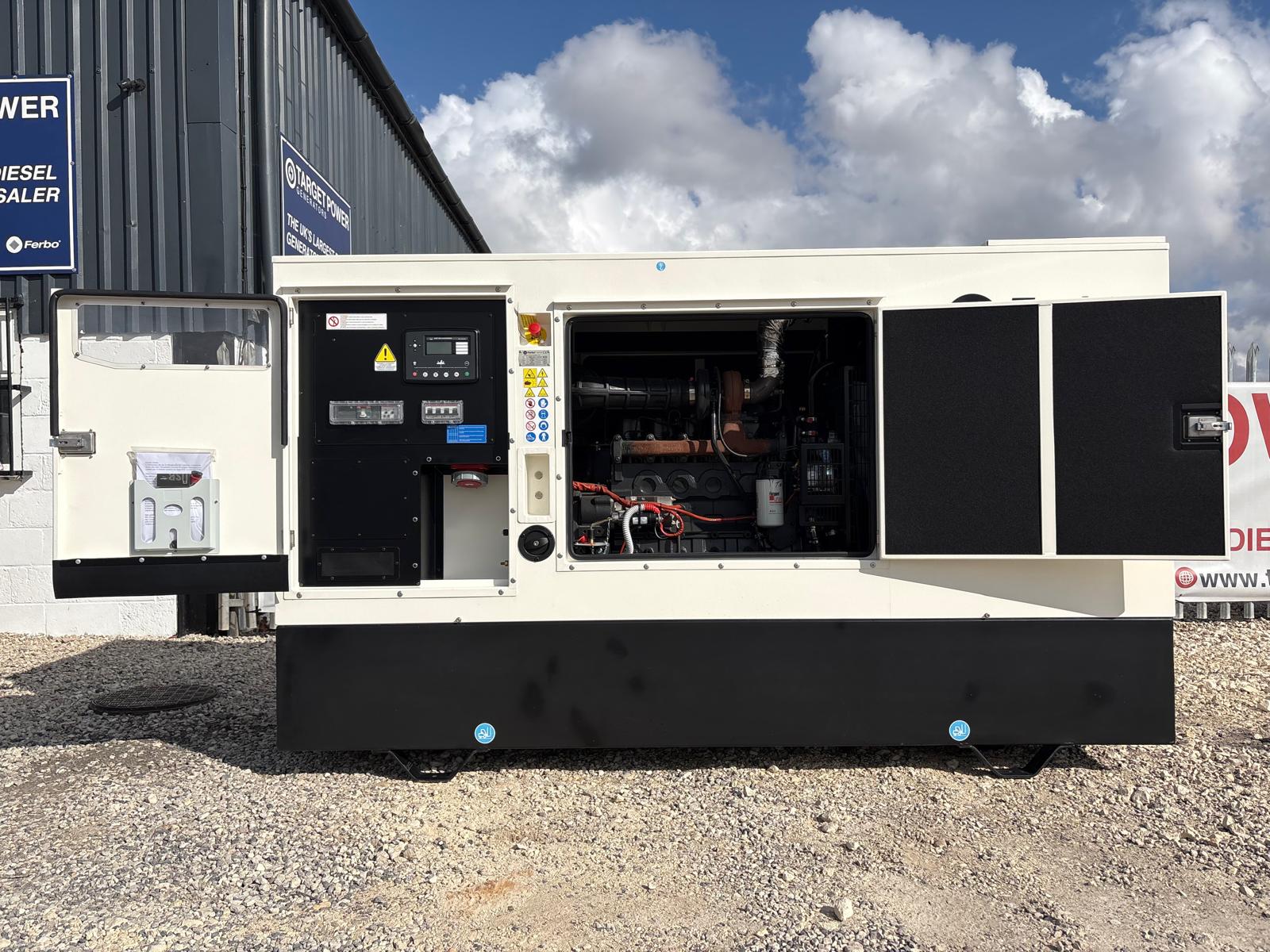
The complete generator includes:
- Engine
- Alternator
- Control panel
- Circuit breaker
- Electrical protection
- Fuel tank
- Base frame
- Acoustic canopy
- Cooling and airflow design
- Exhaust system
- Wiring
- Paint and corrosion protection
- Lifting arrangements
- Service access
These components affect reliability, safety, noise, ease of maintenance, transport and ultimately the residual value of the generator.
We cover this in considerably more detail in our guide: What Makes a Premium Diesel Generator?
Cummins Generator Noise Levels – The Engine Is Only Part of the Equation
Cummins engines are robust, but when comparing complete generators, acoustic performance can vary significantly.
This is another area where looking only at the engine badge can give the wrong impression.
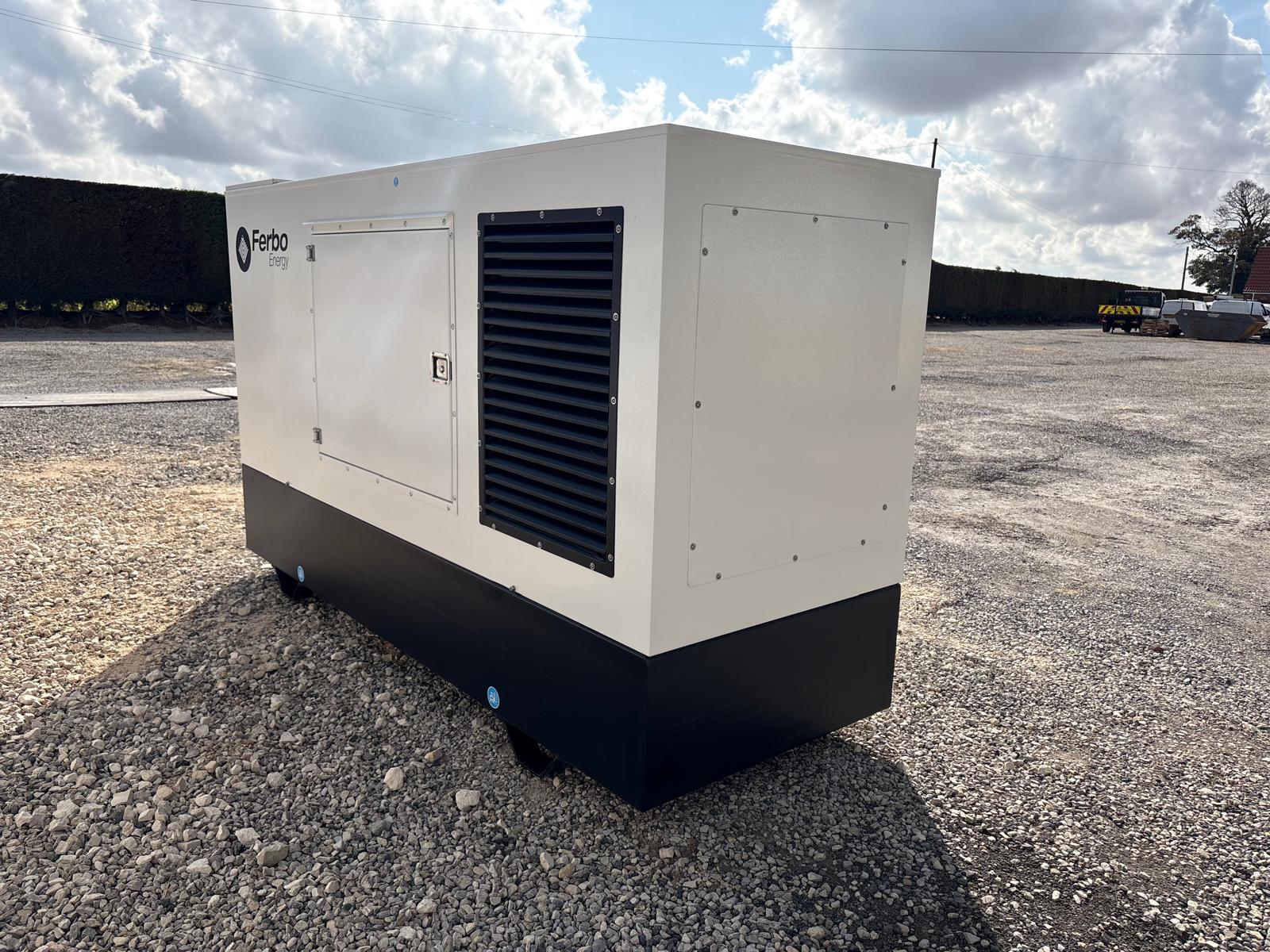
The final noise level depends on the complete acoustic package: airflow paths, radiator discharge, exhaust silencing, insulation, canopy construction and even how doors and service panels are sealed.
Two generators using similar Cummins engines can therefore have noticeably different published sound levels.
For example, our Ferbo FE110-C-PA 100kVA Cummins generator is published at approximately 66 dBA at 7 metres at no load.
The larger Ferbo FE165-C-PA 150kVA Cummins generator is approximately 68 dBA at 7 metres at no load.
When comparing this with another Cummins-powered generator, always make sure the measurement is quoted at the same distance and under comparable operating conditions.
A figure quoted at 1 metre cannot sensibly be compared directly with one quoted at 7 metres.
This is particularly important for residential standby, events, hotels, agriculture and off-grid applications where the generator may be operating relatively close to people.
Read our generator canopy and acoustic design guide for more information.
Are Cummins G-Drive Generators Fuel Efficient?
This is another area where we prefer to be realistic rather than simply say that one engine brand is the best at everything.
Cummins engines can offer good fuel economy at particular power nodes.
But they are not automatically the most fuel-efficient engine at every kVA rating.
For example, around 30kVA we currently favour the Yanmar 4TNV98 when outright fuel economy is the priority. At other power nodes, FPT Iveco, Perkins, Volvo or Scania can also compare extremely well.
This is why we offer different engine manufacturers rather than trying to force every customer into one brand.
The advantage Cummins often gives us is a combination of competitive initial cost, straightforward mechanical design, established parts availability and a globally recognised engine name.
At 100kVA, for example, our FE110-C-PA uses the Cummins 6BTA5.9-G5 G-Drive engine and publishes fuel consumption of approximately 18 litres per hour at 75% load.
At 150kVA, our FE165-C-PA uses the Cummins 6BTAA5.9-G7 G-Drive engine, with published consumption of approximately 29 litres per hour at 75% load.
If a generator is going to run continuously for thousands of hours, we recommend comparing the actual fuel-consumption data for the exact models being considered rather than choosing purely by engine brand.
Why We Use Cummins G-Drive Engines in Our Ferbo Generators
We could simply buy the cheapest Cummins-powered generator we can find and put it on our website.
We don’t.
For the Cummins part of our Ferbo range, we specify genuine Cummins G-Drive engines and then build the rest of the generator around the application.
The advantage for us is that we can combine a recognised Cummins power unit with the Ferbo generator package manufactured in Italy.
Depending on model and specification, our Prime Advanced Cummins generators can include:
- Cummins G-Drive diesel engine
- Mecc Alte or specified industrial alternator
- Deep Sea Electronics control systems on selected specifications
- ABB 4-pole circuit breakers on selected specifications
- Industrial socket packages
- RCD / earth leakage protection where specified
- Six-way fuel valves
- External bulk fuel tank connections
- Bunded or retention base fuel systems
- Battery isolator
- Battery charger and coolant heater where specified
- Central lifting arrangements
- Low-noise acoustic canopy
- C4H corrosion-protection paint finish on our higher specifications
That last point is important.
When we describe one of these as a Ferbo Cummins generator, Cummins provides the engine, but the specification surrounding that engine is one of the main reasons we choose Ferbo.
You can learn more about our reasoning in Why Choose Ferbo Generators?
Why Does Generator Specification Matter for Prime Running?
A generator running for 50 hours a year as emergency backup has a very different life from one running 2,000 hours a year on a farm, construction site or off-grid property.
For prime running, details such as external fuel connections, fuel valves, sockets, service access, acoustic performance and corrosion protection become much more important.
That is why we developed our Ferbo Prime Advanced range.
For standby applications where the generator may spend most of its life waiting for a mains failure, we also offer the Ferbo Standby Select range.
Same basic principle: specify the generator around what it is actually going to do. View our full range of Cummins Diesel Generators here.
Our Popular Cummins G-Drive Generator Models
Target Power supplies Cummins-powered Ferbo generators across a much wider range, from smaller industrial sets through to large open, acoustic and containerised power systems.
Below are some of the Cummins power nodes we commonly supply or stock.
| Ferbo Model | Prime Power | Typical Cummins Engine | Typical Application |
|---|---|---|---|
| FE33-C | Approx. 30kVA | Cummins G-Drive – varies by emissions/specification | Small commercial, agriculture, standby |
| FE55-C | Approx. 50kVA | Cummins G-Drive – model dependent | Commercial, construction, farm power |
| FE66-C | Approx. 60kVA | Cummins G-Drive – model dependent | Prime and standby power |
| FE110-C | 100kVA | Cummins 6BTA5.9-G5 | Commercial, industrial, agriculture, off-grid |
| FE165-C | 150kVA | Cummins 6BTAA5.9-G7 | Industrial, events, construction, prime power |
| FE330-C | Approx. 300kVA | Cummins G-Drive – specification dependent | Large commercial and industrial power |
Note: exact Cummins engine models can change according to emissions standard, frequency, voltage, territory and generator specification. Always check the current data sheet for the exact generator being quoted.
Two of our most popular Cummins models are the 100kVA Ferbo FE110-C-PA with Cummins 6BTA5.9-G5 and the 150kVA Ferbo FE165-C-PA with Cummins 6BTAA5.9-G7.
Both are available as part of our Prime Advanced specification for customers who require a generator designed around regular operation.
100kVA Cummins 6BTA5.9-G5 – Ferbo FE110-C
The FE110-C is one of the Cummins generators we regularly stock because 100kVA is such a popular power node in the UK.
It uses the Cummins 6BTA5.9-G5 six-cylinder diesel engine and provides 100kVA prime / 110kVA standby power.
Our Prime Advanced version includes a 200-litre bunded fuel tank, external bulk fuel connections, six-way valves and a low-noise acoustic package.
Published fuel consumption is approximately 18 L/h at 75% load, while our current acoustic specification is approximately 66 dBA at 7 metres at no load.
View the Ferbo FE110-C-PA 100kVA Cummins generator →
150kVA Cummins 6BTAA5.9-G7 – Ferbo FE165-C
The FE165-C moves up to the Cummins 6BTAA5.9-G7 and provides 150kVA prime / 165kVA standby power.
Our Prime Advanced model includes a 300-litre bunded base tank, external bulk fuel connections, six-way fuel valves and a central lifting point.
This is a popular size for agriculture, construction, industrial sites, events and larger commercial properties.
Is a Cummins Generator Better for Standby or Prime Power?
The answer depends more on the complete generator specification than the word Cummins on the engine.
Cummins Generator for Standby Power
If the generator is only expected to operate during mains failures, initial purchase price becomes more important because annual fuel consumption may be relatively small.
For standby applications we would prioritise:
- Reliable automatic starting
- AMF controller
- Battery charger
- Coolant heater where required
- Correctly sized fuel tank
- Appropriate acoustic performance
- Good circuit protection
- Reliable warranty and parts support
For this type of application, a more cost-effective Cummins-powered package can make complete sense.
Cummins Generator for Prime Power
If the generator is going to operate every day, we look much more closely at the complete package.
Fuel consumption matters more. Noise matters more. Service access matters more. Fuel capacity matters more.
This is also where we particularly value features such as six-way fuel valves, external bulk tank connections, sockets, bunded fuel systems and corrosion-resistant finishes.
A generator that costs slightly more initially can be considerably better value if it is easier and cheaper to operate for the next 5,000 or 10,000 hours.
What About Cummins Generator Resale Value?
Resale value is something we think is overlooked when customers compare generators.
A diesel generator is an asset.
Eventually it will either be traded in, sold or replaced.
Cummins has an advantage here because it is a globally recognised engine manufacturer and there is a large existing market for Cummins-powered equipment.
But again, the engine badge is not the only factor.
In our experience, buyers of used generators also look at the generator manufacturer, alternator, controller, condition, service history, hours, canopy condition and overall specification.
A well-specified Cummins-powered generator from a recognised OEM is therefore likely to be easier to explain to the next buyer than an unknown generator package where very little information is available about the components surrounding the engine.
This is one reason we believe the Ferbo Cummins combination works well: a recognised Cummins engine combined with an identifiable Italian generator manufacturer and known components.
What Should You Check Before Buying a Cummins Generator?
If you are comparing Cummins generators from different suppliers, don’t just ask:
“How much is your 100kVA Cummins?”
Ask these questions instead:
- What is the exact Cummins engine model?
- Where was the engine manufactured?
- Who manufactured the complete generator?
- What alternator is fitted?
- What controller is fitted?
- What make and type of circuit breaker is fitted?
- What is the published noise level and at what distance?
- What is the fuel consumption at 50%, 75% and 100% load?
- Is the fuel tank bunded or does it have a retention system?
- Does it have external bulk fuel connections?
- What corrosion-protection / paint specification is used?
- How is the generator lifted and transported?
- What warranty applies to the engine?
- What warranty applies to the complete generator?
- Who actually handles a warranty claim in the UK?
- Are service and major repair parts readily available?
If two generators are £2,000 apart in price, the answers to those questions normally explain why.
Which Cummins Generator Should You Buy?
There is no single answer.
If you need an emergency standby generator that may only run for a few hours every year, a cost-effective Cummins-powered generator from a reputable OEM may be exactly what you need.
If the generator is going beside a hotel, house or wedding venue, we would put much more emphasis on the acoustic package.
If it is going to run thousands of hours every year, we would compare fuel consumption and serviceability much more carefully.
And if the generator is going into a rental fleet, we would look at sockets, RCD protection, fuel connections, containment, lifting arrangements and physical durability.
Our preference for the Ferbo Cummins range is therefore not simply because there is a Cummins badge on the engine.
It is because we can combine a Cummins G-Drive engine with a generator package manufactured in Italy and configure the rest of the machine around how our customers actually use generators.
That is the difference we think customers should look for.
See Our Cummins-Powered Ferbo Generators in Action
We regularly upload generator walkarounds, running demonstrations, noise tests and customer machines to our YouTube channel.
Watch our Ferbo Generator Video Library on YouTube →
Related Cummins Generator Products & Guides
- 100kVA Cummins Ferbo FE110-C-PA – 6BTA5.9-G5
- 150kVA Cummins Ferbo FE165-C-PA – 6BTAA5.9-G7
- Ferbo Diesel Generators
- Ferbo Prime Advanced Generators
- Ferbo Standby Select Generators
- Why Choose Ferbo Generators?
- What Makes a Premium Diesel Generator?
- Generator Canopy Designs Explained
- Diesel Generators Currently in Stock
- Contact Target Power Generators
Independent Manufacturer Information
If you are researching Cummins-powered generators, we also recommend checking the engine manufacturer’s information rather than relying purely on a generator reseller’s description.
Cummins describes its G-Drive range as dedicated to power generation applications and provides technical and after-sales support through its global service network.
Need Help Comparing Cummins Generators?
If you have been quoted two Cummins generators and cannot understand why there is such a difference in price, send us the two data sheets.
We can look beyond the Cummins badge and compare the engine model, alternator, controller, breaker, fuel system, acoustic performance and complete generator specification.
Sometimes the cheaper generator is all you need.
Sometimes spending a little more at the start gives you a much better generator over its working life.